All Stories
- Animals
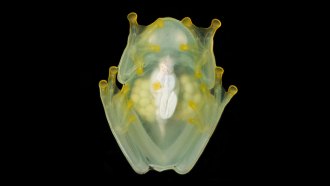
Sleeping glass frogs go into stealth mode by hiding red blood cells
Glass frogs snoozing among leaves blend in by hiding almost all their red blood cells in their liver.
- Health & Medicine
How to be heat-safe when playing sports
Protecting young athletes from overheating is getting more important as climate change turns up the temperature.
- Animals
Analyze This: Puppies naturally mimic human actions
Unlike cats, whose ancestors hunted alone, dogs evolved from a species that hunted in packs. Being social might explain why pups copy humans.
- Tech
Magnetic fields melt and re-form new shape-shifting devices
Miniature machines made of gallium and magnetic particles can switch from solid to liquid and back.
- Genetics
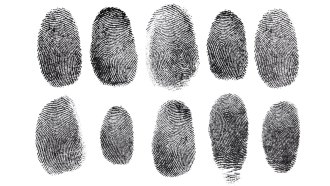
Experiment: Are fingerprint patterns inherited?
Let’s investigate whether fingerprint patterns are created randomly or whether they are influenced by genetics.
- Physics
Scientists Say: Magnetism
Magnetism is an aspect of one of the four fundamental forces of nature: electromagnetism.
- Animals
This biologist uses microwave radiation to save endangered species
Pei-Chih Lee works to preserve genetic material that can help researchers learn more about endangered animals, such as pandas and clouded leopards.
- Chemistry
Chemists have unlocked the secrets of long-lasting Roman concrete
By searching ancient texts and ruins, scientists found a concrete recipe that could make buildings stronger — and help address climate change.
- Environment
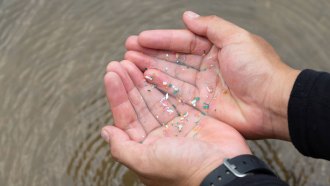
Sea life may suffer as plastic bits alter metals in water
This interplay between plastics and metals could affect how each affects the environment — and suggests opportunities for controlling their risks.
- Animals
Let’s learn about frogs
Frogs are a fascinating bunch of amphibians. Unfortunately, they’re also dying off in huge numbers.
- Computing
Scientists Say: Hardware and Software
Hardware includes all the physical parts of a device you can hold. Software includes all the coded instructions to make that hardware work.
- Animals
Random hops always bring jumping beans to shade — eventually
It’s not fast, but jumping beans use randomness to maximize their chances of getting out of the sun’s heat.