Uncategorized
- Animals
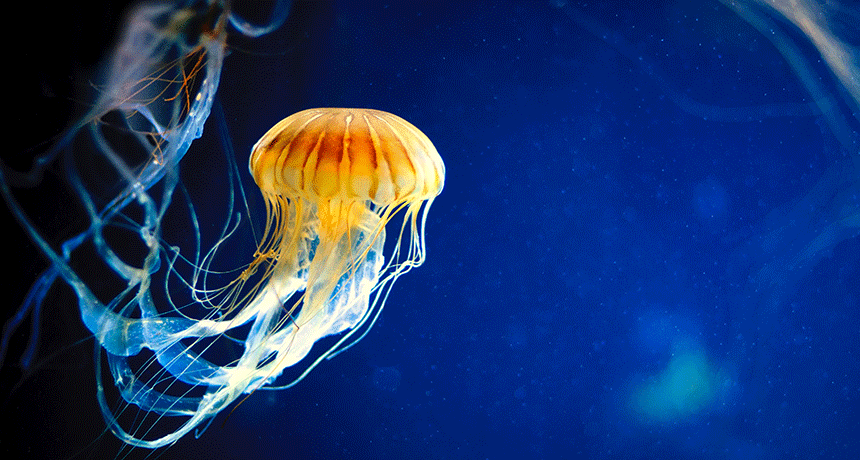
Scientists Say: Nematocyst
Nematocysts are special cells in some ocean critters, such as jellyfish, sea anenomes and corals. They have a barb coated in venom that shoots out at their prey.
- Computing
New tech helps deaf-blind people ‘watch’ TV
An innovative system can let deaf-blind people “watch” television in real time without needing someone right there to interpret for them.
- Climate
When the moon throws shade, the weather can change
Scientists have been puzzled about how a solar eclipse can impact weather. Here’s some of what they learned during the August 2017 event.
- Environment
Wildfires worsen extreme air pollution in U.S. northwest
America’s air is getting cleaner — except in places prone to frequent wildfires.
- Psychology
Are you scared of heights? Virtual reality could help
Virtual reality may help people battle a real-world fear of heights.
- Animals
Koala genes could help scientists save these furry animals
Scientists have examined the clues within koalas’ genetic instruction book. They are learning more about how to save these cuddly creatures.
- Health & Medicine
Scientists Say: Remission
Remission is a term used in medicine. It describes a disease that isn’t active anymore —whether it is cured or simply dormant.
- Planets
New Horizons data reveal first global maps of Pluto and Charon
Astronomers have made new charts of Pluto and its moon Charon. They show high peaks, deep depressions and strange ridges.
- Earth
An ancient cold snap causes heated debate
Despite criticism from fellow scientists, some researchers won’t let go of the idea that a comet caused a prehistoric cold snap.
- Physics
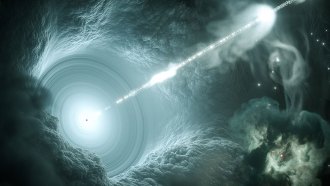
Scientists traced an incoming neutrino back to its galactic birthplace
The high-energy particle was born in a blazar 4 billion light-years away, scientists now report.
- Animals
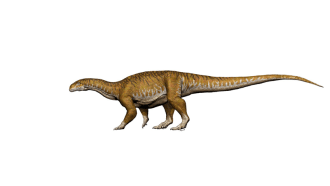
There’s more than one way to build a giant dinosaur
Some early long-necked dinosaurs may have built big bodies from a different blueprint than their later giant relatives.
- Space
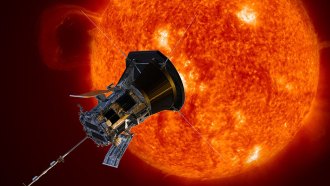
The Parker Solar Probe aims to touch the sun
The Parker Solar Probe is about to make a historic voyage to the sun.