Would growing a big heart make the Grinch strong?
The Grinch’s heart grows in an instant, which may not have been good for him
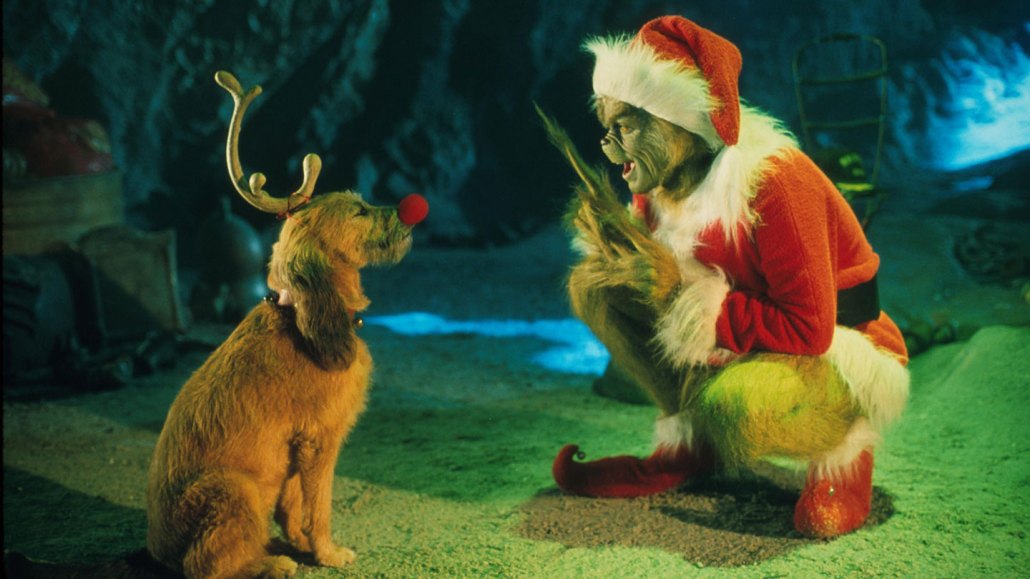
The Grinch dresses up as Santa Claus and disguises his dog as a reindeer (as seen here in a still from the 2000 movie version) to pull off a holiday heist. He gives everything back, though, after his heart grows in size.
Getty Images/Staff/Hulton Archive/Getty Images Plus
In the classic Dr. Seuss tale, How the Grinch Stole Christmas, the Grinch starts out with a heart “two sizes too small.” This grump lives alone on a mountain with only his dog, Max. Annoyed by his neighbors’ Christmas celebrations, the Grinch disguises himself as Santa Claus and steals all the Whos’ toys, food and decorations.
Poised to throw it all off a mountain, he stops when he hears joyful singing from Whoville. His heart fills, and “they say that the Grinch’s small heart grew three sizes that day.” That gave the Grinch “the strength of 10 Grinches plus two,” says the 1966 movie of the same name. He pulls the stolen goods back from the brink and returns everything.
Would a too-small heart make you grumpy like the Grinch? And what would happen if your heart went from too small to really big in an instant? The answer depends on what causes the heart to shrink or swell, experts say. And whether or not you are a snake.
HOW THE GRINCH STOLE CHRISTMAS! © TURNER ENTERTAINMENT CO. (S26); TM & © 1957 DR. SEUSS ENTERPRISES, L.P. ALL RIGHTS RESERVED
Grumpy Grinch
Heart size is generally pegged to body size, says Michelle Kittleson. She’s a cardiologist — a heart doctor — at Cedars-Sinai Smidt Heart Institute in Los Angeles, Calif. Bigger people tend to have bigger hearts. But some people, she says, have hearts that are naturally bigger or smaller than average for their bodies. It’s not clear why. However, she says, “there are negative consequences of having a too-small heart.”
For instance, in one 2025 study, researchers looked at medical records from more than 360,000 people in Australia. Those with smaller-than-average hearts had a higher risk of dying within five years than did people with average or larger hearts. The researchers shared their findings in JACC: Advances.
Smaller hearts may not pump blood as well as larger ones. That might make it harder for them to exercise.
Maybe the Grinch’s heart was so small because he didn’t exercise enough, Kittleson suggests. “Then that made him really tired, and that made him grumpy,” she says. “Or maybe he did the research, and he found out that his life expectancy was shortened because of it, and that made him even grumpier.”
Growing hearts
But would rapidly increasing his heart’s size be good for the Grinch?
The human heart is a four-chambered pump that moves blood around the body. There are many ways a heart can grow, notes Leslie Leinwand. She’s a molecular biologist and geneticist at the University of Colorado Boulder.
With vigorous exercise, “your heart gets bigger,” Leinwand says — but “in a good way.” That can be true for athletes who do lots of cardio, such as swimmers and marathon runners.
Explains Kittleson, “their heart gets bigger and thicker. But it’s a good thing in them because it helps them pump more blood per minute than someone with a normal-size heart.” Pregnancy also makes the heart grow to boost blood to the developing fetus.
When hearts grow in such good ways, the whole organ expands. If people stop exercising, or give birth, their hearts will shrink back to normal size within months.
But the Grinch’s heart expanded in just moments. So maybe his heart is more like a snake’s?
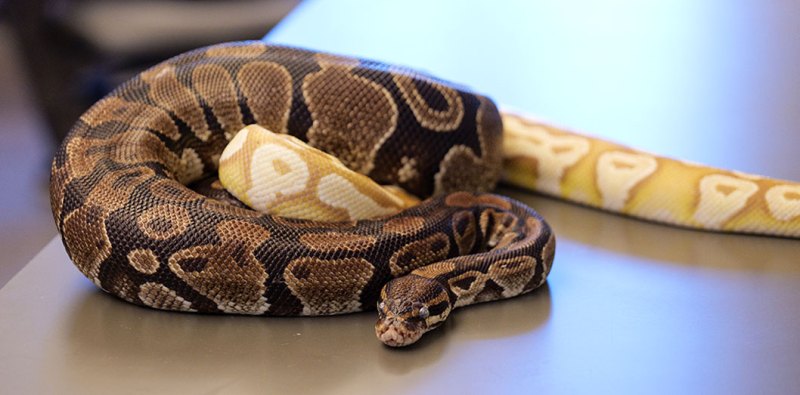
Leinwand studies pythons. They’re among the world’s largest snakes. After consuming large prey, such as adult deer, these snakes can go for months before their next meal. But when pythons do eat, their hearts can balloon by up to 25 percent in a day. And the bigger a python’s meal, the more its heart grows. Larger hearts pump blood with more force, the researchers discovered.
Patrick Campbell/University of Colorado
Leinwand’s team shared this 2024 finding in the Proceedings of the National Academy of Sciences. They don’t know, however, if this makes the snakes stronger overall.
Once a meal is digested, the heart shrinks again. Snakes can go through many shrink-and-grow cycles with no ill effect. Leinwand hopes that studying these snakes will lead to treatments that make human hearts healthier.
Disease and stress
Some diseases can enlarge hearts in deadly ways. “If you’ve got untreated high blood pressure,” Leinwand says, “you can get a huge heart, and it’s not good for you.”
Stress, bad heart valves and some genetic diseases that affect the heart can also result in bigger, but weaker, hearts. In those cases, the heart muscle grows to pump more blood. But at the same time, the inside of the left ventricle — the chamber that pumps oxygenated blood to the body — can shrink. That makes it harder for the heart to push blood out. This kind of growth takes time, Kittleson says.
Do you have a science question? We can help!
Submit your question here, and we might answer it an upcoming issue of Science News Explores
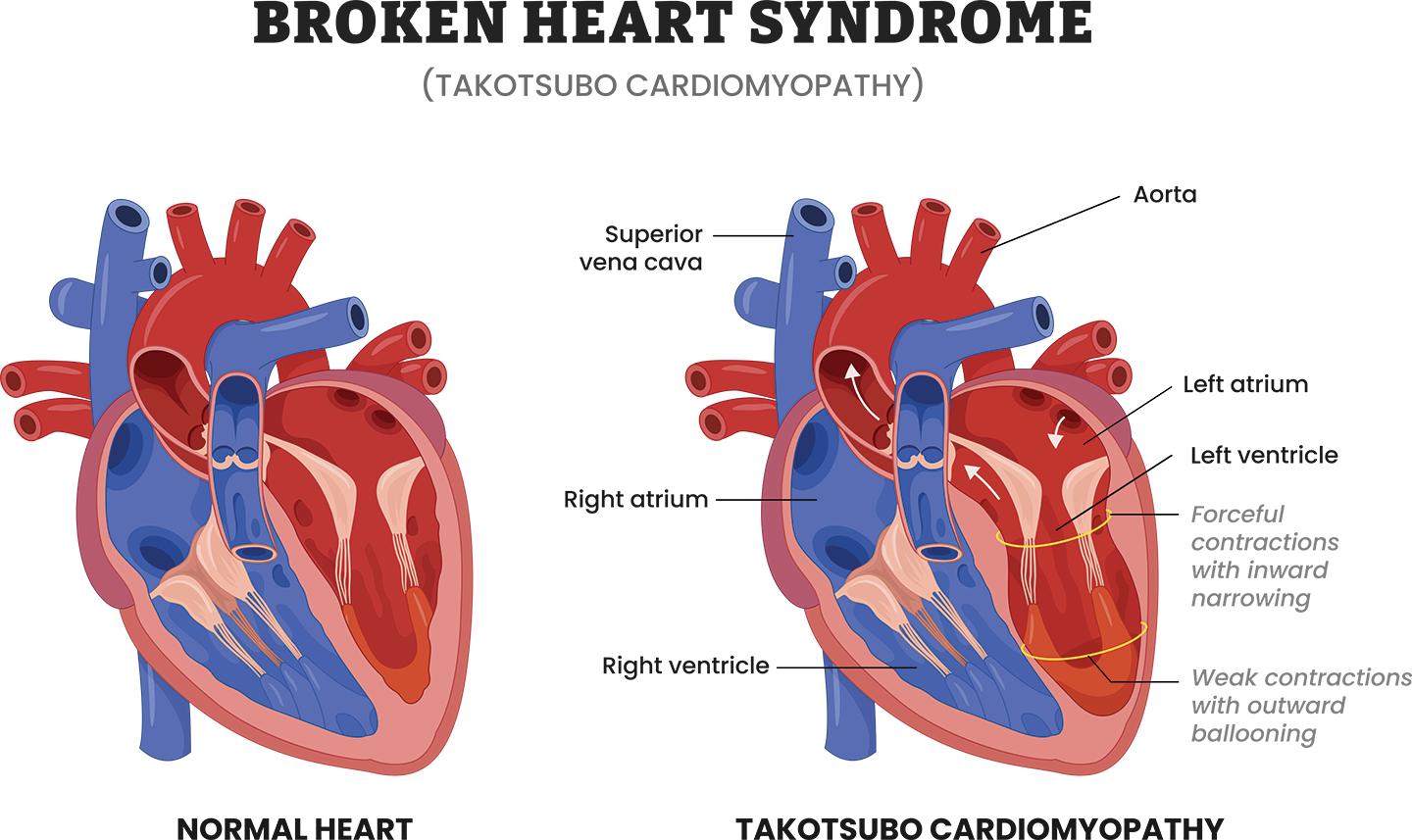
But there is one rare condition in which the heart can inflate suddenly, she notes. Called takotsubo or stress cardiomyopathy, it is brought on by extreme stress. (Takotsubo is a Japanese word for “octopus pot.” It’s called that because the heart chamber takes the shape of a pot used to catch octopuses.)
The stress might be from something good. Maybe someone won the lottery or was given a surprise party. But that stress might also come from some nasty shock, like a sudden fright or hearing awful news. For that last reason, takotsubo is also called broken-heart syndrome.
YUMAGEMA/SHUTTERSTOCK
A surge of epinephrine (also called adrenaline) from either type of stress can make the heart chamber bulge. That causes immediate heart failure as the heart gets too big to pump blood.
So the Grinch wouldn’t have become super-strong. Instead, Kittleson says, “He would have keeled over and collapsed.”
The heart of someone who gets prompt medical care and survives can return to normal size in a few months.
In the Seuss tale, the Grinch went from really mean to nicer when his heart grew. But if he had a snake heart, he might not have gotten kinder. Notes Leinwand, “our snakes, when they eat a lot, they get rather aggressive.”