3-D: Short for three-dimensional. This term is an adjective for something that has features that can be described in three dimensions — height, width and length.
atmosphere: The envelope of gases surrounding Earth, another planet or a moon.
atom: The basic unit of a chemical element. Atoms are made up of a dense nucleus that contains positively charged protons and uncharged neutrons. The nucleus is orbited by a cloud of negatively charged electrons.
carbon dioxide: (or CO2) A colorless, odorless gas produced by all animals when the oxygen they inhale reacts with the carbon-rich foods that they’ve eaten. Carbon dioxide also is released when organic matter burns (including fossil fuels like oil or gas). Carbon dioxide acts as a greenhouse gas, trapping heat in Earth’s atmosphere. Plants convert carbon dioxide into oxygen during photosynthesis, the process they use to make their own food.
chemical: A substance formed from two or more atoms that unite (bond) in a fixed proportion and structure. For example, water is a chemical made when two hydrogen atoms bond to one oxygen atom. Its chemical formula is H2O. Chemical also can be an adjective to describe properties of materials that are the result of various reactions between different compounds.
chemistry: The field of science that deals with the composition, structure and properties of substances and how they interact. Scientists use this knowledge to study unfamiliar substances, to reproduce large quantities of useful substances or to design and create new and useful substances. (about compounds) Chemistry also is used as a term to refer to the recipe of a compound, the way it’s produced or some of its properties. People who work in this field are known as chemists.
climate change: Long-term, significant change in the climate of Earth. It can happen naturally or in response to human activities, including the burning of fossil fuels and clearing of forests.
crop: (in agriculture) A type of plant grown intentionally grown and nurtured by farmers, such as corn, coffee or tomatoes. Or the term could apply to the part of the plant harvested and sold by farmers.
electric charge: The physical property responsible for electric force; it can be negative or positive.
filter: (n.) Something that allows some materials to pass through but not others, based on their size or some other feature. (v.) The process of screening some things out on the basis of traits such as size, density, electric charge.
ion: (adj. ionized) An atom or molecule with an electric charge due to the loss or gain of one or more electrons. An ionized gas, or plasma, is where all of the electrons have been separated from their parent atoms.
metal: Something that conducts electricity well, tends to be shiny (reflective) and is malleable (meaning it can be reshaped with heat and not too much force or pressure).
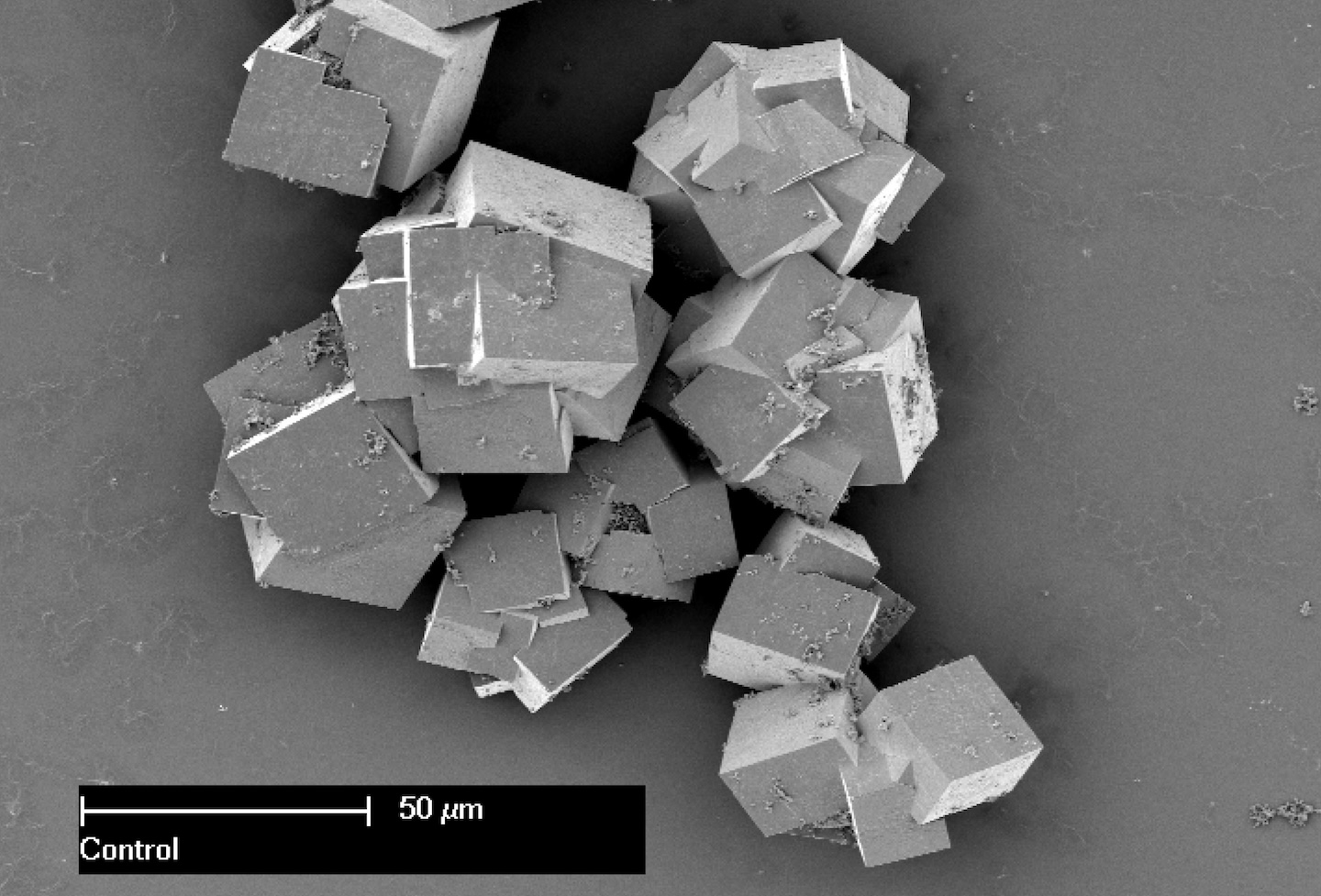
MOFs: Short for metal organic frameworks. These are carbon-based chemicals that contain clusters of metal atoms. Those metal atoms can trap other compounds and chemically react with them.
molecule: A group of atoms that represents the smallest possible amount of a chemical compound. Molecules can be made of single types of atoms or of different types. For example, the oxygen in air is made of two bound oxygen atoms (O2). Water is made of two hydrogen atoms and one oxygen atom (H2O).
Nobel Prize: A prestigious award named after Alfred Nobel. Best known as the inventor of dynamite, Nobel was a wealthy man when he died on December 10, 1896. In his will, Nobel left much of his fortune to create prizes to those who have done their best for humanity in the fields of physics, chemistry, physiology or medicine, literature and peace. Winners receive a medal and large cash award.
oxygen: A gas that makes up about 21 percent of Earth's atmosphere. All animals and many microorganisms need oxygen to fuel their growth (and metabolism).
porous: The description of a substance that contains tiny holes, called pores, through which a liquid or gas can pass.
random: Something that occurs haphazardly or without reason, based on no intention or purpose. Or an adjective that describes some thing that found itself selected for no particular reason, or even chaotically.
sponge: Something that sops up liquids or other materials and holds them until squeezed out or removed in some other way.
toxic: Poisonous or able to harm or kill cells, tissues or whole organisms. The measure of risk posed by such a poison is its toxicity.
wavelength: The distance between one peak and the next in a series of waves, or the distance between one trough and the next. It’s also one of the “yardsticks” used to measure radiation. Visible light — which, like all electromagnetic radiation, travels in waves — includes wavelengths between about 380 nanometers (violet) and about 740 nanometers (red). Radiation with wavelengths shorter than visible light includes gamma rays, X-rays and ultraviolet light. Longer-wavelength radiation includes infrared light, microwaves and radio waves.