Cells
- Genetics
Explainer: What are genes?
Genes are DNA regions that tell cells how to build proteins. But we have many more proteins than genes. And much of our DNA controls when genes turn on and off.
- Health & Medicine
Scientists Say: Metabolism
Metabolism is all the chemical activities that support life in a cell, an organ and a whole organism’s body.
- Life
Electro-tweezers let scientists safely probe cells
These nanotweezers can sample the innards of cells without killing them. They use an electric field to net materials for study. And they are gentle enough to repeatedly probe the same cell.
- Genetics
Gene editing creates mice with no mom
Scientists used gene editing to make the first ever mice with two dads. But these motherless pups died soon after birth.
- Earth
Designing tomorrow’s burger
Many people enjoy biting into a juicy hamburger. But getting it to the table can be hard on the environment. That's why scientists are at work developing new forms of beef and other meats, ones that don't require slaughtering animals.
- Life
Bacteria are all around us — and that’s okay
Scientists may have identified less than one percent of all bacteria on Earth. But there’s a reason to keep up the hunt. These microbes could help us understand and protect our planet.
- Health & Medicine
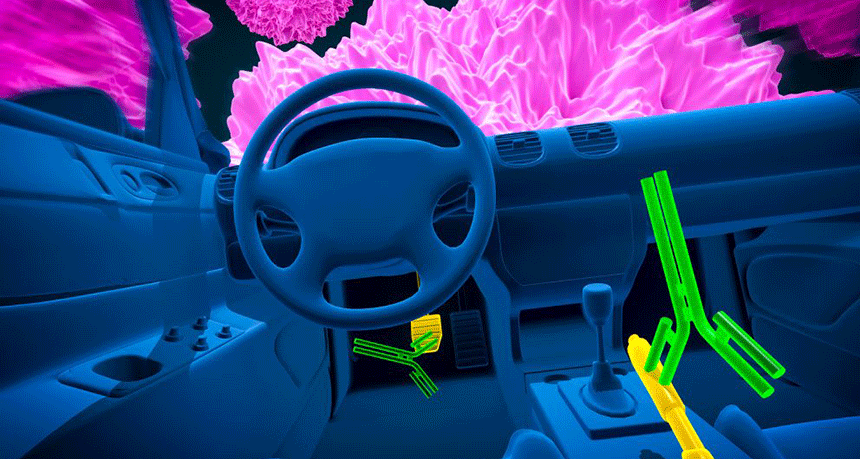
Explainer: What are proteins?
In the body, proteins act as biochemical machines to carry out the work of cells.
- Health & Medicine
Immune targeting of cancers wins two a 2018 Nobel Prize
Doctors used to target cancers with a scalpel, toxic chemicals and radiation. Two scientists just won a Nobel Prize for coming up with a fourth tactic: turning on the immune system.
- Chemistry
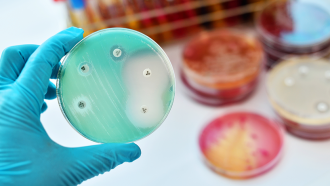
Nom, nom! These bacteria eat antibiotics for lunch
Some soil microbes don’t just break down antibiotics, they can eat them too. Scientists have found one way they do it.
- Health & Medicine
Worms in the gut keep mice from getting plump on high-fat food
Parasites kept mice from gaining weight on a high-fat diet. But receiving transplants of immune cells from these wormy mice also halted weight gain in mice without worms.
- Health & Medicine
Scientists discover how norovirus hijacks the gut
Noroviruses make people vomit, but scientists didn’t actually know why. It now turns out that those viruses cause their misery by attacking special “tuft” cells in the gut.
- Life
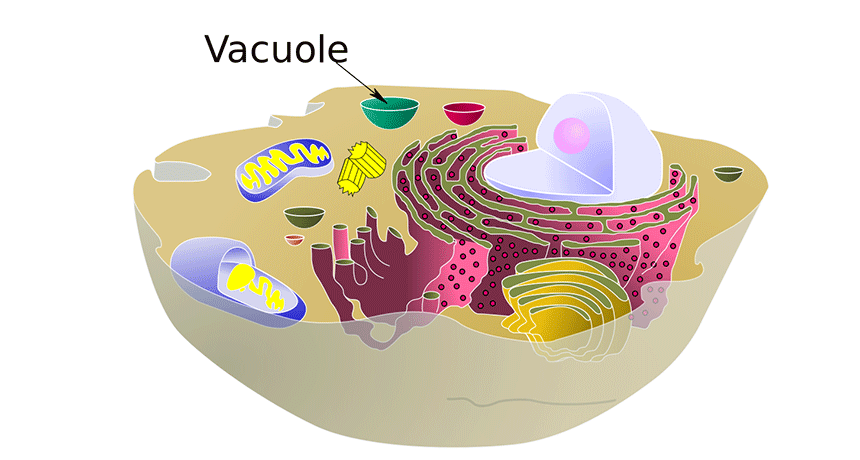
Scientists Say: Vacuole
Cells can’t always get rid of trash or digest food immediately. This week’s word describes where they store their stuff.