Cells
- Animals
Cool Jobs: Puzzling over proteins to study life and death
Scientists are using proteins to understand dinosaur family trees, to fight malnutrition with a peanut-butter mix in Africa and to make “Google maps” of human cells.
- Brain
Spying on brains in action
New tools let scientists see inside the brain and nervous system as their research subjects move around.
- Brain
Brains may need flexible networks to learn well
New data suggest that brain cells may learn best when they are able to easily make and break off communications with neighbors — or distant brain regions.
- Brain
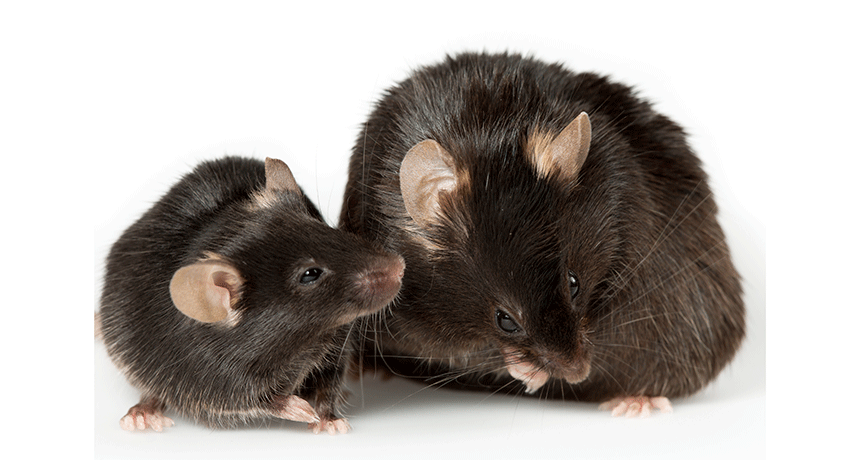
Brain’s immune system can play role in weight gain
Weight isn’t just calories in, calories out. When mice eat a fatty diet, immune cells in their brains become inflamed. That makes the animals gain more weight.
- Brain
Mild brain injury can cause bead-like swellings in brain cells
Mild head bumps cause temporary swellings — like beads in a necklace — within brain cells. If cells get enough time to heal, those “beads” will disappear.
- Life
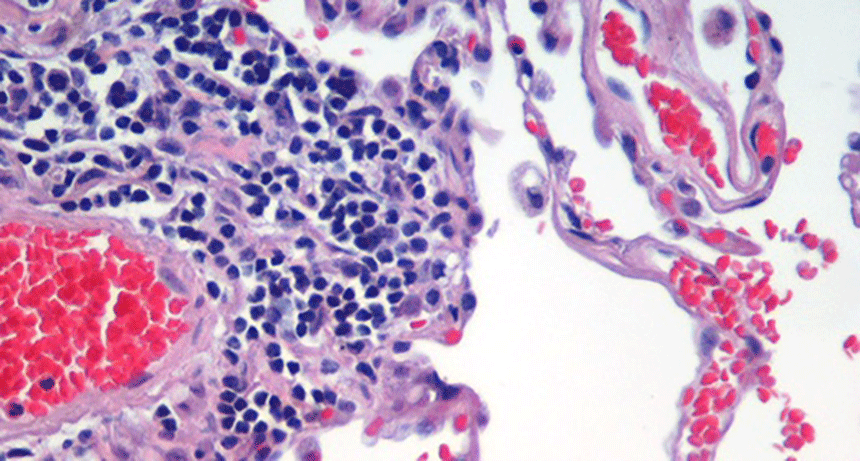
Scientists Say: Histology
When scientists study the parts of an animal or plant, they are studying anatomy. When they need a microscope to see the details of that anatomy, they are studying histology.
- Health & Medicine
Explainer: What is a vaccine?
Vaccines give the body’s natural defense system a boost against infectious disease.
- Life
Scientists Say: Biofilm
When times get tough, some microbes like to stick together. They form a mass stuck to a surface, called a biofilm.
- Life
Scientists Say: Mitochondrion
Mitochondria are structures inside cells that converts certain chemicals into adenosine triphosphate — a molecule cells use as energy.
- Life
‘Nanostraws’ safely sneak a peek inside cells
Scientists have developed tiny straws that let them peek inside a living cell without killing it or even damaging it.
- Life
Scientists Say: ATP
This chemical is a bit like a rechargeable battery. Cells build and break apart its chemical bonds to store and release energy.
- Genetics
How to make a ‘three-parent’ baby
Scientists combined an egg, sperm and some donor DNA: The end result: what appears to be healthy babies.