Earth's Systems
- Earth
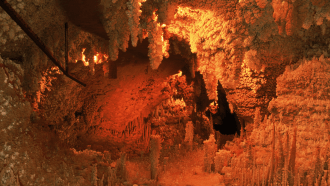
Scientists Say: Cave Popcorn
This type of cave formation can occur as glossy, soaplike bubbles or as a bristly, cauliflower-like clusters.
- Earth
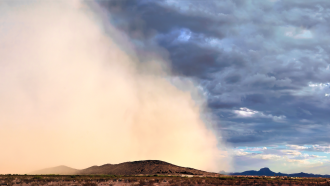
Scientists Say: Haboob
Thunderstorms in the desert create downdrafts that lift desert sand into a moving, wall-like cloud.
- Space
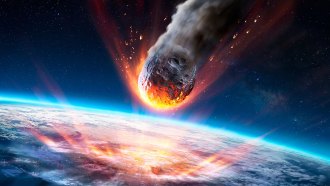
Analyze This: What are the chances of an asteroid hitting Earth?
The odds of a big space rock striking the planet are higher than you might think. But don’t worry — asteroid strikes may be preventable.
- Earth
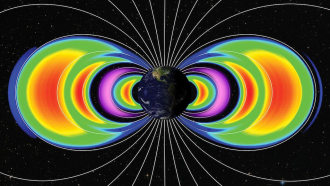
Scientists Say: Van Allen belts
Astronomers have detected these radiation belts around Earth and beyond. Jupiter’s belt is thousands of times as intense as Earth’s.
- Humans
Scientists Say: Artifact
Take note: This term might describe ancient pottery shards in the field of archeology. But in statistics, it’s a misleading pattern in data.
- Space
Analyze This: Ice around baby stars may hint at origins of Earth’s water
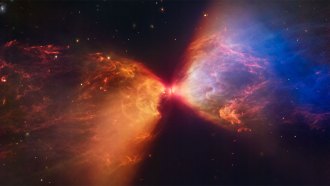
Scientists have now gotten a good look at the ice around a baby star. It might help them unravel the origins of the water needed for life on Earth.
- Earth
This ‘megaflash’ is now the longest lightning bolt on record
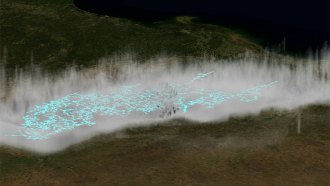
A reanalysis of satellite data showed that a 2017 Texas-to-Missouri lightning megaflash stretched 829 kilometers (515 miles) and lasted 7.39 seconds.
- Earth
Let’s learn about rivers
Rivers vary a lot in size and terrain, but all share a few basic features.
- Environment
Watch out: Hail can get really big!
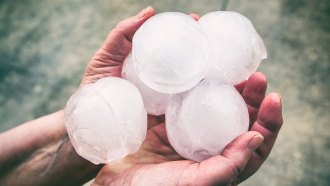
New data from hailstones suggest most of these icy chunks may not form the way scientists long thought.
- Environment
Study uncovers secrets in water’s underground treks
Water's subterranean travels can be long, slow — and carry pollutants far from where they first got drawn into the Earth.
- Planets
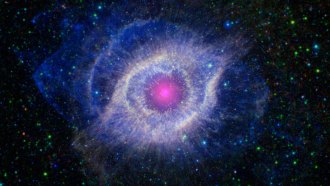
A giant, busted planet fuels a nebula’s mysterious glow
This Helix Nebula is like a colorful explosion frozen in time. Its center seems to be steadily radiating X-rays.
- Planets
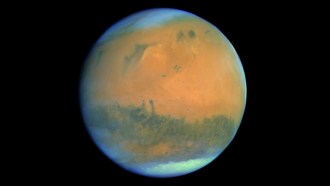
Mars’ rust suggests it was once wet — and its seas frigid
Mars may once have held enough water to fill oceans and form coastlines. And the planet’s red dust hints that its seas would have been quite frigid.