Earth's Systems
- Earth
Earth farts may explain some spooky floating lights
The gases released by earthquakes might occasionally ignite, triggering ghostly lights sometimes witnessed in South Carolina.
- Earth
Scientists Say: Lava bomb
An explosive volcanic eruption can shoot a blob of lava into the air. As that blob travels, it cools, creating a dangerous lava bomb.
- Earth
Scientists Say: Frost Quake
When wet soil abruptly freezes, it creates high pressure underground. When the pressure releases, it can trigger a mini-earthquake called a frost quake.
- Earth
Explainer: How volcanoes erupt
Magma can sit underground for tens, hundreds or even thousands of years before an influx of new magma or gush of gas triggers a volcano to erupt.
- Earth
Surprise! The jet stream can trigger cloud formation
Most cloud-seeding particles may come from a newly discovered mechanism — stratospheric intrusion.
- Space
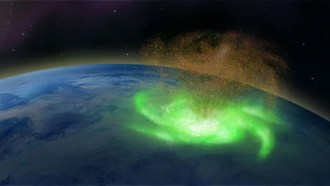
Summer ‘space hurricanes’ are emerging high above Earth’s magnetic poles
A separation — and later recombining — of Earth’s magnetic field lines may be what churns up these super-high-altitude storms of plasma.
- Earth
Hawaii’s Kilauea volcano recently erupted like a stomp rocket
This appears to be a newfound type of eruption. It could only be recognized because of the extensive monitoring of Kilauea's crater.
- Earth
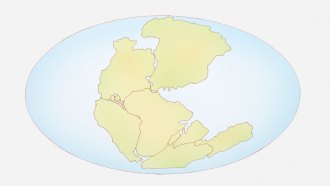
Scientists Say: Supercontinent
These gigantic landmasses form when much of Earth’s landmass smashes together.
- Earth
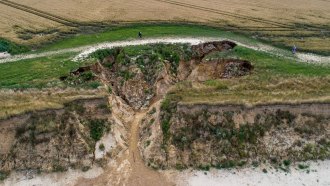
Experiment: Can plants stop soil erosion?
Soil erosion washes pollutants into streams and rivers — but plants may help limit that.
- Earth
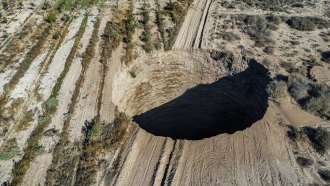
Many natural underground stores of freshwater are shrinking
A lot of these aquifers are quickly disappearing due to climate change and overuse. Fortunately, there is growth in some of the world’s major aquifers.
- Earth
Explainer: Sprites, jets, ELVES and other storm-powered lights
Fleeting glows collectively known as “transient luminous events” flash in the skies above powerful lightning storms.
- Climate
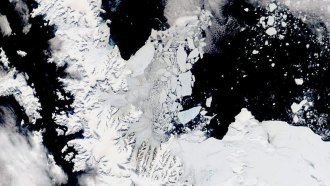
Warmer seas trigger skyrocketing ice loss in 3 Antarctic glaciers
Destabilized by waves and vanishing sea ice, one of the glaciers lost 25 kilometers (15.5 miles) of ice in 16 months — a possible hint of worse to come.