Earth's Systems
- Physics
Scientists Say: Coriolis Effect
Because Earth spins, airborne objects traveling far and fast — such as airplanes — experience deflections in their motion.
- Physics
Before the ancient Egyptians, nature may have carved sphinxes
Steady ‘winds’ can carve clay blobs into lion-shaped landforms called yardangs, a new study suggests. One such yardang may have inspired the Great Sphinx of Giza.
- Archaeology
Analyze This: Stonehenge’s ‘Altar Stone’ has mysterious origins
After a century of searching for the source of the Altar Stone, scientists have yet to figure out where ancient people got the rock.
- Climate
Some tree leaves are finding it too hot for photosynthesis
Earth’s ongoing fever threatens to push entire forests toward this heat limit — and possible death.
- Oceans
Explainer: Why are so many hurricanes strengthening really fast?
This dangerous trend appears relatively new — and growing. Studies also have begun linking it to our warming world.
- Earth
To get diamonds perfect for Barbie, make and break a supercontinent
Most pink diamonds may have formed billions of years ago during the tectonics that led to formation and breakup of Nuna, Earth’s first supercontinent.
- Earth
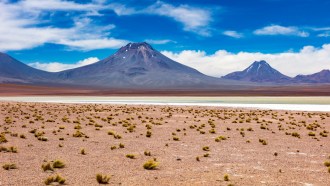
The sun shines brightest in South America’s Atacama Desert
Solar rays in this high-altitude desert at times rival the light intensity on Venus.
- Climate
Let’s learn about why summer 2023 was so hot
Human-caused climate change has played a big role in this summer’s historic heat.
- Tech
Gravity ‘batteries’ might help a weighty renewable-energy problem
To store the energy generated by wind and solar power, researchers are looking at mammoth systems that raise and lower weights.
- Earth
Canada’s Crawford Lake seems to mark when the Anthropocene began
Mud at the bottom of this lake holds a record showing how humanity has been changing our planet. But the Anthropocene isn’t an official new epoch yet.
- Earth
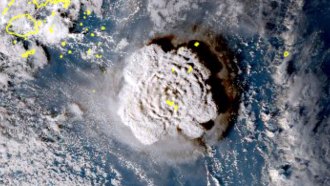
A volcanic eruption sparked the highest lightning ever seen
The eruption plume spawned lightning that started 20 to 30 kilometers (some 12 to 19 miles) above sea level.
- Earth
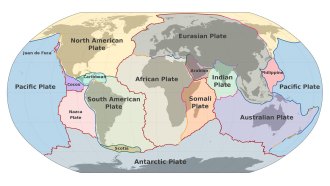
Scientists Say: Tectonic Plate
Tectonic plates are giant slabs of rock that make up Earth’s outer layer.