Earth's Systems
- Physics
Explainer: What is friction?
The force of friction always acts to slow things down. It depends on just two factors: the surfaces and how hard they press together.
- Physics
Explainer: Radioactive dating helps solve mysteries
Knowing the decay rate of radioactive elements can help date ancient fossils and other artifacts.
- Earth
Fossil-fuel use is confusing some carbon-dating measurements
Carbon-14 dating of recent artifacts will soon give scientists confusing results. That’s another price society pays for its reliance on fossil fuels.
- Physics
Explainer: Radiation and radioactive decay
Like clockwork, radioactive forms of some elements shed parts of themselves as they attempt to become nonradioactive.
- Climate
Greenland’s inland ice is melting far faster than anyone thought
Inland melting of the Northeast Greenland Ice Stream is accelerating — and may contribute far more to sea level rise than earlier estimates suggested.
-
- Earth
Analyze This: Wildfires are pumping more pollution into U.S. skies
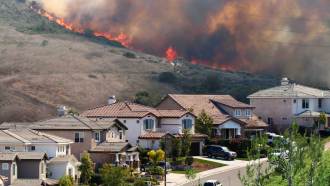
Researchers wanted to study the health effects of wildfire smoke. But they realized they didn’t know where it was and how much exposure people had.
- Physics
Scientists Say: Neutron
Neutrons are one of the main building blocks of atoms and have no electric charge.
- Physics
Cosmic timeline: What’s happened since the Big Bang
Energy, mass and the cosmos' structure evolved a lot over the past 13.82 billion years — much of it within just the first second.
-
- Earth
One 2022 tsunami may have been as tall as the Statue of Liberty
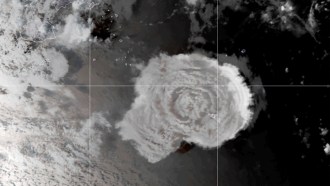
A massive volcanic eruption in the South Pacific, earlier this year, appears to have triggered one tsunami that was initially 90 meters (nearly 300 feet) tall.
- Climate
Heat waves appear more life-threatening than scientists once thought
This is bad news as a warming planet leads to growing numbers of excessive heat waves — and millions more people facing potentially deadly temperatures.