Engineering Design
- Agriculture
How to grow your own science experiment
Does fertilizer help plants grow better? You might expect it to, but how can you know? This experiment will help you test it yourself.
- Chemistry
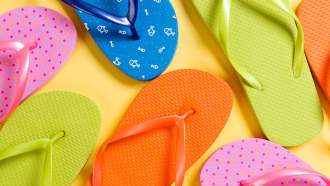
Here’s how to make flip-flops biodegradable
Innovative flip-flops made from an algae-based plastic decompose in soil or compost. The comfy shoes also avoid use of fossil fuels.
- Computing
New device tells smiles from frowns — even through a mask
Most facial-recognition software has to see the whole face to work. The new type can reconstruct an entire expression from just viewing your cheeks.
- Animals
Around the world, birds are in crisis
Human activities around the world are threatening bird species. Numbers of even some of the most common species are starting to fall.
- Health & Medicine
Third major vaccine shows great promise against COVID-19
This vaccine, which may be easier to get to the public, appears to be 90 percent effective at halting disease and maybe spread of the new coronavirus.
- Materials Science
This artificial skin feels ‘ghosts’ — things you wish were there
Engineers have developed a wearable device that simulates the sense of touch. It may benefit robotic surgery and deep-sea exploration.
- Health & Medicine
Moderna vaccine for COVID-19 appears nearly 95 percent effective
A second coronavirus vaccine appears super effective in preventing people from being sickened by COVID-19.
- Tech
Computers are changing how art is made
Some people have challenged the idea that artificial intelligence can be creative. But new software can provide inspiration to artists or fully partner with them in the creative process.
- Health & Medicine
New Pfizer vaccine appears 90 percent effective against COVID-19
Preliminary finds show one of the new coronavirus vaccines appears 90 percent effective at reducing symptomatic COVID-19 infections.
- Chemistry
Ordinary paper turns into flexible human-powered keypad
Engineers have figured out how to turn sheets of paper into rugged, low-cost electronic devices, such as a computer keypad.
- Materials Science
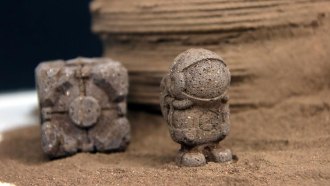
Analyze This: Insect shells could help builders on Mars
When mixed with rocky soil, a compound called chitin makes a strong material. It could be pulled from the shells of insects used for food.
- Brain
Many student athletes face risk of concussions that heal slowly
High school girls and those with a history of concussions appear to take longest to recover.