Engineering Design
- Health & Medicine
Some microbial hitchhikers may weaken body’s attack on COVID-19
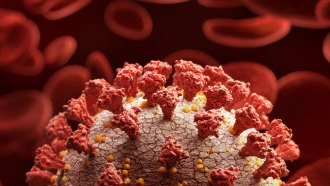
New research identifies an altered mix of microbes in the body — ones commonly seen in people with poor diets — that may worsen coronavirus disease.
- Brain
Active bodies build stronger brains
Aerobic fitness and physical activity correlate with widespread brain health in adolescents, according to a new imaging study in England.
- Health & Medicine
Some young adults will volunteer to get COVID-19 for science
Researchers will soon give some healthy people the new coronavirus. Their young volunteers have agreed to get sick to speed coronavirus research.
- Chemistry
Extreme pressure? Diamonds can take it
Diamond retains its structure even at extreme pressures, which could reveal how carbon behaves in the cores of some exoplanets.
- Math
Scientists Say: Outlier
Data points often fall within a normal range. When one data point sticks out a lot, it might be an outlier.
- Life
A robot made with a Venus flytrap can grab fragile objects
Scientists have “borrowed” the hair-trigger leaves of Venus flytraps to make a gentle grabber that can be controlled by a cellphone app.
- Brain
New technology can get inside your head. Are you ready?
New technologies aim to listen to — and maybe even change — your brain activity. But just because scientists can do this, should they?
- Animals
Newfound technique allows some tree snakes to climb wide trees
When a tree is too wide to climb, brown tree snakes use a lasso-like trick to slowly ascend up to snacks.
- Physics
Scientists Say: Piezoelectric
Piezoelectric materials produce an electric voltage when they are bent or squished. This can let us harvest electricity from movement.
- Health & Medicine
Five questions about COVID-19 vaccine trials in teens, answered
Scientists are now testing COVID-19 vaccines in teens. Why do teens need a separate trial? And what would happen? We’ve got answers.
- Physics
Physicists have clocked the shortest time span ever
The experiment revealed how long it takes light to cross a hydrogen molecule: just a couple hundred zeptoseconds.
- Environment
Unmasking the pandemic’s pollution problem
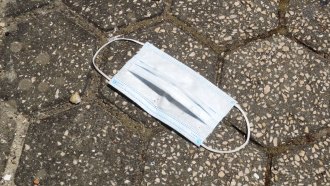
Discarding all the materials people use to protect themselves from COVID-19 has created a growing environmental problem.