HS-ETS1-2
Design a solution to a complex real-world problem by breaking it down into smaller, more manageable problems that can be solved through engineering.
- Environment
New ocean sanctuaries house young coral and even flee peril
Two ISEF finalists want to foster growth of new coral reefs. So these teens designed and built self-navigating, undersea houseboats for coral larvae.
- Tech
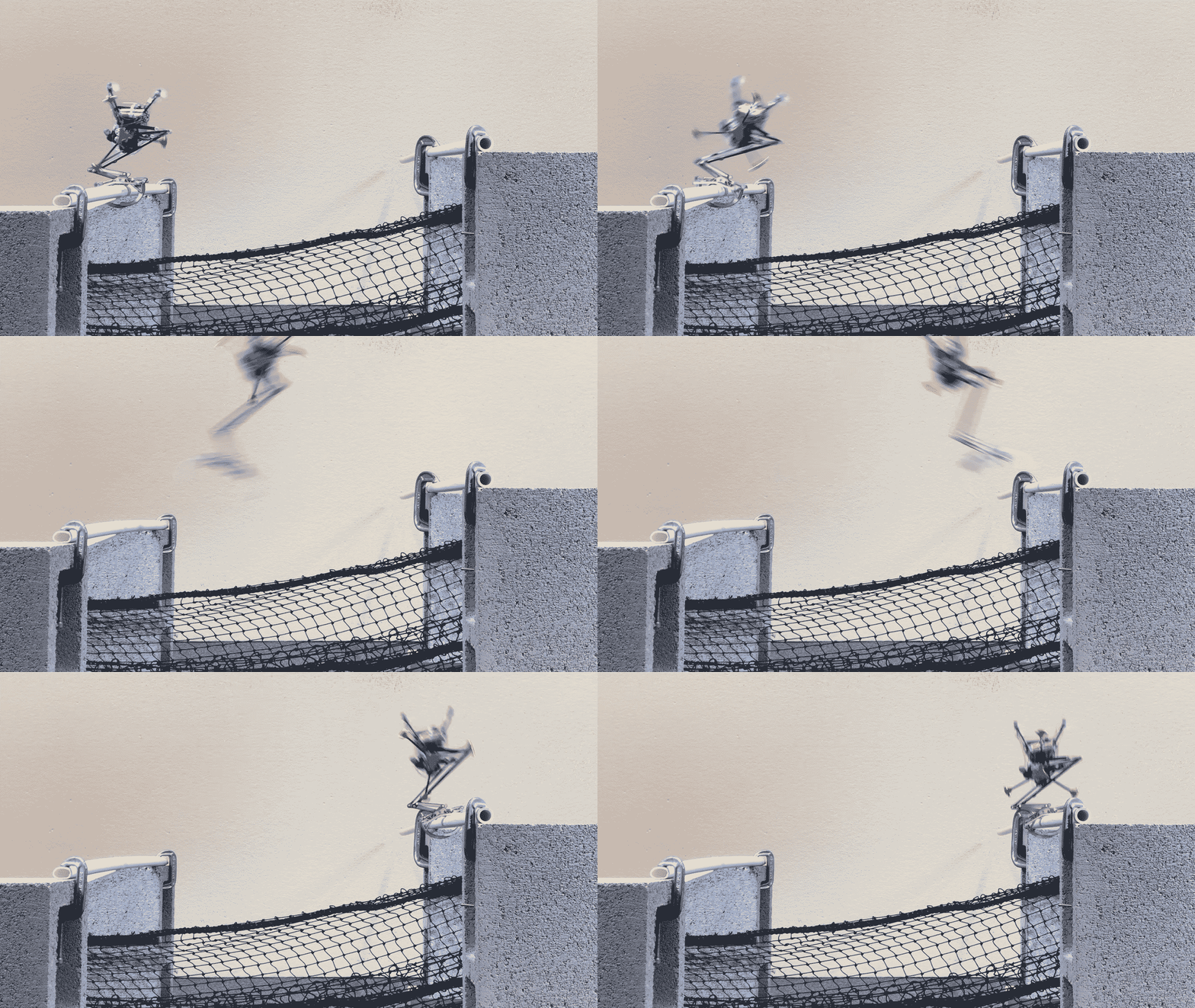
This squirrel-like robot has some serious hops
Salto the jumping robot has a claw-like gripper. Like a squirrel, it can adjust its movement to help it stay balanced to stick a landing on "branches."
- Artificial Intelligence
AI, make me a video game
Developers can use AI to generate code, dialog, playable environments and more. But at its heart, making video games remains a creative human endeavor.
- Science & Society
Does your natural history museum need a makeover?
A lot of their old-fashioned dioramas — a type of exhibit — are biased, boring or even unscientific. Here’s what modern museums are doing to fix that.
- Tech
This teen engineer’s device sniffs out common food allergens
Inspired by his own severe food allergies, Thermo Fisher JIC finalist Samvith Mahadevan built a device to protect people from allergen exposure.
- Tech
Move over Iron Man, exoskeletons are getting real
Real-world wearable devices help people stay safe at work and accomplish everyday tasks.
- Tech
Bird-inspired airplane wings could boost flight performance
Rows of flaps inspired by a bird wings’ feathers improve airfoil performance to boost lift and reduce drag.
- Tech
A man silenced by paralysis got his ‘voice’ back, thanks to AI
New computer-linked brain implants offer hope to those who have lost the ability to speak or move.
- Physics
Shark intestines inspire pipes with a strictly one-way flow
The pipes contain a twisty coil that lets liquids flow in one direction but not the other.
- Tech
A Jurassic Park-inspired method can safely store data in DNA
DNA can store all types of data. An amber-like material can now protect its information long-term — or release it on demand for short-term use.
- Physics
Science reveals the reasons behind painful paper cuts
Some types of paper are more likely to cause paper cuts. It’s the paper’s thickness and slicing angle that matter, physicists conclude.
- Tech
Did builders of Egypt’s first pyramid use a water-powered elevator?
A controversial study suggests that ancient people might have used one to hoist the stones used to assemble into King Djoser’s pyramid.