HS-ETS1-2
Design a solution to a complex real-world problem by breaking it down into smaller, more manageable problems that can be solved through engineering.
- Space
Sci-fi inspired spacesuit recycles pee into drinking water
A spacesuit that collects and filters urine could prove a boon to future remote workers — even on Earth. Like the idea? Thank Dune.
- Earth
Analyze This: Where are U.S. earthquakes most likely?
A model used data on historical quakes and measurements from active faults to forecast risks of damaging earthquakes in the next 100 years.
- Tech
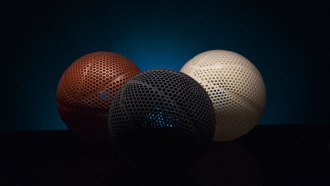
Holey basketballs! 3-D printing could be a game-changer
Wilson’s 3-D printed “airless” basketball is nearly silent and will never deflate, but will it prove a slam dunk for players and fans?
- Physics
Aerodynamics involved in shooting hoops can make vehicles greener
Some ships host tall spinning cylinders that act like sails. Roughing the cylinders’ surface will greatly boost fuel efficiency, teen scientists find.
- Materials Science
A bit of electricity can glue hard metals to soft materials
Using this method to stick and unstick metals from soft materials could one day create new types of batteries.
- Genetics
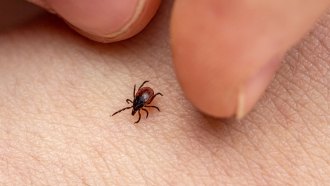
A protein in sweat may protect people from Lyme disease
That protein stopped the disease-causing bacterium from growing in lab dishes or infecting mice.
- Tech
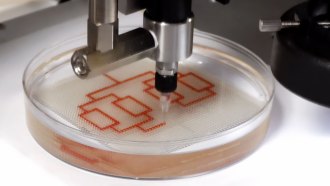
Bioelectronics research wins top award at 2024 Regeneron ISEF
Three grand-award winners each took home at least $50,000. Hundreds more teens shared more than $9 million in prizes at the international competition.
- Brain
Herbal medicine could help recovery after concussion
A finalist at Regeneron ISEF found that a plant native to China could supplement a common pain reliever that comes with unwanted side effects.
- Environment
To limit pollution, new recipe makes plastic a treat for microbes
Microplastics made from fossil fuels take centuries to disappear. But the plant- and algae-based plastic can break down in weeks to months.
- Tech
Lego bricks inspired a new way to shape devices for studying liquids
Inspired by Lego building blocks, the approach could enable design of adaptable tools to study how fluids move through very small spaces.
- Physics
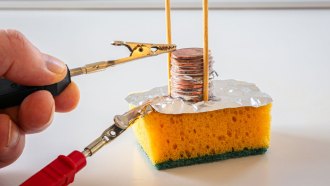
Experiment: Make your own cents-able battery
Make your own ‘voltaic pile’ with pennies and nickels, and find out how many coins will make the most electricity!
- Genetics
Scientists Say: Genetic Engineering
Genetic engineering involves adding, changing or removing certain pieces of DNA from a living thing to give it desired traits.