HS-ETS1-3
Evaluate a solution to a complex real-world problem based on prioritized criteria and trade-offs that account for a range of constraints, including cost, safety, reliability, and aesthetics, as well as possible social, cultural, and environmental impacts.
- Environment
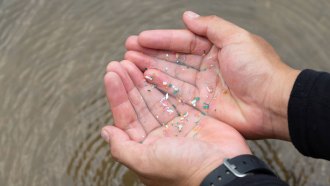
Sea life may suffer as plastic bits alter metals in water
This interplay between plastics and metals could affect how each affects the environment — and suggests opportunities for controlling their risks.
- Climate
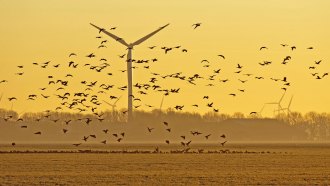
Here’s how to increase clean energy without harming wildlife
Wind farms, solar panels and more take up land and may harm wildlife. Researchers are working to resolve this conflict.
- Physics
A powerful laser can control the paths that lightning takes
In a mountaintop experiment, a laser beamed at the sky created a virtual lightning rod that snagged several bolts.
- Tech
Think of this new tech as sunglasses for our windows
Keeping buildings cool can use a lot of energy. Thanks to quantum computing, engineers designed a coating to cut the warming light that enters windows.
- Materials Science
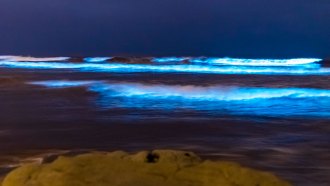
Analyze This: Algae behind blue-glowing waves light up a new device
Some algae glow blue when they experience forces. Held in transparent plastic, they now make devices light up in response to gentle pushes and tugs.
- Tech
New robot can pick up a single drop of liquid
The new device, which looks like a pair of plastic pinchers, is the first to be able to pick up individual droplets of liquid.
- Tech
Can a robot ever become your friend?
Social robots can teach, help and keep people company. What would it take for machines to form real friendships with people? And do we even want that?
- Environment
For a better brick, just add poop
Sewage sludge. Cow dung. They’re not just waste — scientists are finding uses for processed poop in construction materials.
- Tech
Will the internet soon reach the one-third of people without it?
Access to the internet is a human right, yet much of the world can’t get online. New tech has to be affordable and usable to end this digital divide.
- Health & Medicine
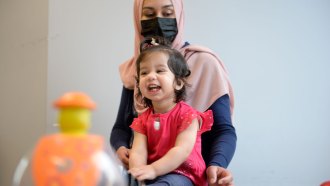
Toddler now thrives after prenatal treatment for a genetic disease
Ayla was treated before birth for the rare, life-threatening Pompe disease. Now a thriving 16-month-old toddler, her treatments will still need to continue.
- Environment
Bacterial ‘living wires’ could help protect the seas and climate
Long, thin bacteria that conduct electricity may be able to help clean up oil spills and reduce emissions of methane, a powerful greenhouse gas.
- Chemistry
Explainer: What is a hydrogel?
These unusual materials have a host of unusual properties. You can even make a starch-infused version in your kitchen.