HS-ETS1-3
Evaluate a solution to a complex real-world problem based on prioritized criteria and trade-offs that account for a range of constraints, including cost, safety, reliability, and aesthetics, as well as possible social, cultural, and environmental impacts.
- Health & Medicine
Should we use a genetic weapon against mosquitoes carrying malaria?
One gene drive to eliminate malaria seems to work in the lab. Now it’s time to ask local people if they want it released in the wild.
- Tech
A shape-shifting robotic tooth-cleaner might one day brush for you
A swarm of billions of magnetic, bacteria-killing nanoparticles can be shaped into bristles to fit any surface, including between teeth.
- Chemistry
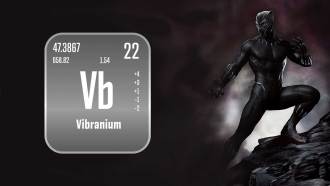
Could we make vibranium?
The ‘perfect’ metal may belong to the fictitious Marvel world of Wakanda, but scientists hope to one day mimic some of its key traits.
- Materials Science
These fabrics change color as they stretch
Stretchy, color-shifting cloth may lead to new art, fashions and sensors. A century-old Nobel-prize-winning invention served as its inspiration.
- Animals
Sea creatures’ fishy scent protects them from deep-sea high pressures
TMAO’s water-wrangling ability protects a critter’s critical proteins — including muscle — from crushing under deep ocean pressures.
- Tech
Can computers think? Why this is proving so hard to answer
In 1950, Alan Turing proposed a test to tell a human from a computer. Today, that Turing test may tell us more about ourselves than about machines.
- Tech
Welcome to the metaverse
The idea of the metaverse comes from science fiction. But technology could make such immersive virtual worlds a reality.
- Chemistry
Recipes for modern beauty products aren’t so modern after all
An art historian has combined forces with chemists to uncover the science behind cosmetics used about 500 years ago.
- Health & Medicine
New stick-on ‘sonar’ device lets you watch your own heart beat
This wearable patch might one day make personalized medicine affordable almost anywhere in the world.
- Tech
Engineers put a dead spider to work — as a robot
Scientists literally reanimated the dead. It’s a new research field called “necrobotics.”
- Animals
Like an octopus, this glove lets fingers grip slippery objects
The octopus-inspired suckers on each fingertip grab and release objects on demand.
- Physics
You might someday ‘wallpaper’ your bedroom with this loudspeaker
This thin, flexible and lightweight loudspeaker could reduce noise in loud spaces. It also might enable listeners to experience sound in new ways.