HS-ETS1-3
Evaluate a solution to a complex real-world problem based on prioritized criteria and trade-offs that account for a range of constraints, including cost, safety, reliability, and aesthetics, as well as possible social, cultural, and environmental impacts.
- Tech
Magic, cooking and droids inspire this roboticist
Dennis Hong and his team design human-like robots that can help solve problems and also entertain.
- Tech
New glasses can ‘hear’ what you lip sync — and tell your phone
The lip-reading device enables voice commands without the voice. The glasses determine what their wearer is saying by tracking facial movements.
- Space
New telescope images may unveil stars fueled by dark matter
Three objects from the early universe could be hypothesized “dark stars,” researchers claim. But other scientists remain unconvinced.
- Science & Society
Top 10 tips for how Gen Z’ers can get the best online experiences
Emerging data point to how today’s teens can maximize their screen time’s benefits while limiting its risks.
- Tech
Could Star Trek replicators exist?
Experts break down what’s possible and what’s not for this classic science-fiction invention.
- Materials Science
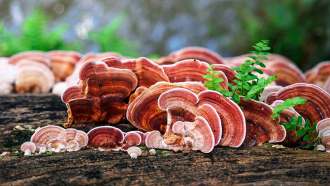
Made from fungi, this vegan leather can self-heal holes or rips
If made under gentle conditions, leather formed from the “roots” of mushrooms can retain the ability to regrow and repair minor damage.
- Tech
This electronic bandage sterilizes wounds with flashes of light
Dentists have sterilized medical equipment with ultraviolet-C light for years. Applying this tech to bandages had proven a challenge — until now.
- Tech
Gravity ‘batteries’ might help a weighty renewable-energy problem
To store the energy generated by wind and solar power, researchers are looking at mammoth systems that raise and lower weights.
- Tech
A ‘mini cyclone’ helps detect coronavirus in the air
A new device can detect from seven to 35 coronavirus particles per liter of air in minutes. That’s close to a PCR test’s sensitivity — but much quicker.
- Climate
For greener toilets and air conditioning, consider saltwater
Using saltwater would allow coastal cities to save their freshwater for drinking and to reduce their carbon footprints. Some could save money, too.
- Space
Fairy tale inspiration could help rovers explore risky places
Taking a cue from Hansel and Gretel, scientists propose a way for rovers to send back data from treacherous terrain.
- Environment
Fungi help rescue crops being harmed by microplastics
Microplastics in the soil hinder plant growth. But two finalists at Regeneron ISEF found that fungi and farm waste can reduce the harm.