HS-ETS1-3
Evaluate a solution to a complex real-world problem based on prioritized criteria and trade-offs that account for a range of constraints, including cost, safety, reliability, and aesthetics, as well as possible social, cultural, and environmental impacts.
- Artificial Intelligence
Chatbots may make learning feel easy — but it’s shallow
People who use search engines gain deeper knowledge and care more about what they learn than those who rely on AI chatbots, a new study finds.
- Genetics
Scientists created human egg cells from skin cells
The technique could someday help people without reproductive cells of their own have children. But much more research is needed.
- Artificial Intelligence
5 things to remember when talking to a chatbot
When using ChatGPT or other chatbots, remember your voice matters and watch out for flattery and hallucinations. And for important advice, ask real people.
- Health & Medicine
A little shape-up helps these pimple patches get a grip
These zit patches use some innovative geometry to anchor onto skin. This solves one problem that’s hindered other uses of microneedles for drug delivery.
- Tech
A modified glue gun squirts a material to help heal broken bones
The handheld printer might someday apply bone-repair patches directly onto fractures — complete with antibiotics to prevent infection.
- Earth
These ultra-long experiments outlive their scientists — on purpose
To study phenomena that unfold over decades or even centuries, scientists may launch projects they may never see finished.
- Science & Society
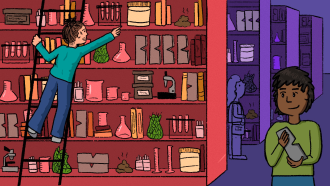
Behold the world’s weirdest library — which might save your life
This bizarre collection of “standard reference materials” help ensure the safety of waterways, buildings, medicines, foods and much more.
- Artificial Intelligence
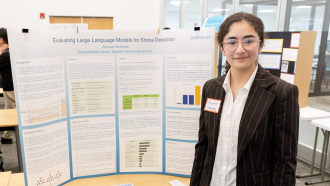
AI shouldn’t be trusted with your mental health, teen finds
Her research suggests that ChatGPT and similar AI systems are not suitable replacements for human therapists.
- Chemistry
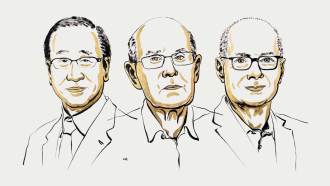
Structures that work like Hermione’s magic handbag land a chemistry Nobel
Richard Robson, Susumu Kitagawa and Omar Yaghi developed these metal-organic frameworks, which can trap pollutants, collect water from air and more.
- Health & Medicine
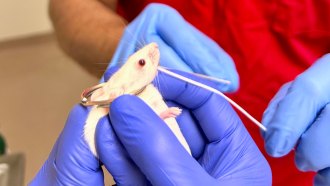
Floss delivers flu vaccine to mice needle-free
The creative solution may one day allow people to vaccinate themselves — no injection needed.
- Physics
Discoveries behind quantum computers win the Nobel Prize in physics
John Clarke, Michel Devoret and John Martinis turned up quantum effects in an electric circuit. This 1980s find underlies today’s quantum computers.
- Space
35 years on, Hubble continues to revolutionize astronomy
The Hubble Space Telescope is an icon in astronomy. Here are some of its most out-of-this-world images.