HS-ETS1-3
Evaluate a solution to a complex real-world problem based on prioritized criteria and trade-offs that account for a range of constraints, including cost, safety, reliability, and aesthetics, as well as possible social, cultural, and environmental impacts.
- Animals
Lab-grown mosquitoes could help protect Hawaii’s native birds
To curb the spread of avian malaria, a teen researcher found a way to make those mosquitoes grow faster and stronger.
- Brain
Brain scans may offer clues to the mental health of trans youth
A teen researcher identified a possible link between brain development and mental health in young trans people.
- Environment
New water treatment process removes pollutants most now don’t
The two-step water treatment process could cut not only excreted drugs flowing into waterways but also some nutrients that feed harmful algal blooms.
- Earth
Can engineering save Antarctica’s most vulnerable glacier?
Bold engineering projects might stabilize Thwaites Glacier and slow sea level rise. But no one knows if they will work — or have serious side effects.
- Earth
Analyze This: Smartphone data may help improve GPS
Data from millions of phones helped fill in maps of the ionosphere, an atmospheric layer that can muddle radio signals key for navigation systems.
- Artificial Intelligence
AI-designed proteins target toxins in deadly snake venom
The current way to produce antivenoms is outdated. In lab tests, AI-designed proteins could save mice from a lethal dose of snake toxin.
- Artificial Intelligence
DeepSeek pioneers a new way for AI to ‘reason’
Chatbots answer one question at a time. Reasoning agents work through a problem step by step. DeepSeek makes this new type of AI far less costly.
- Tech
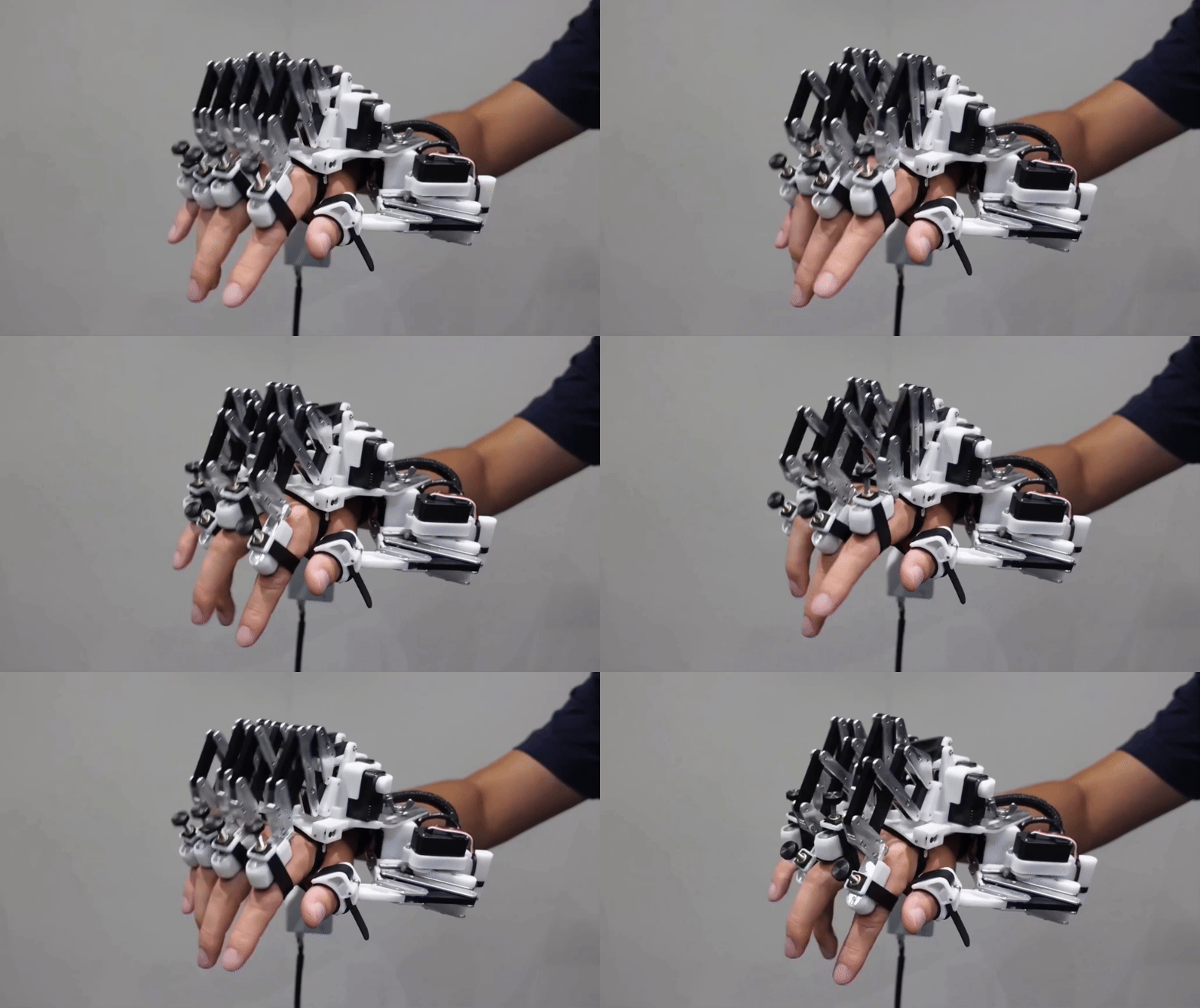
A robotic hand helps piano players’ fingers move faster
Robotic devices like this might someday help musicians, gamers, athletes or even surgeons improve their dexterity.
- Genetics
This young biologist looked for links between diet and dyslexia
Thermo Fisher JIC finalist Giselle Drewett wanted to know how lifestyle might influence a gene related to dyslexia.
- Tech
Meet 5 types of robots with living body parts
Creature-machine mash-ups seem weird or even creepy. But biohybrids that make use of living tissue could be the future of robotics.
- Plants
Microbes give plants a way to make ‘meaty’ nutrients
Enzymes from animals helped a test plant make two nutrients essential for a balanced diet. Normally, those nutrients would only be found in meat.
- Artificial Intelligence
Scientists Say: Large language model
Large language models, or LLMs, are language-processing systems that underpin advanced AI technologies such as ChatGPT.