HS-ETS1-3
Evaluate a solution to a complex real-world problem based on prioritized criteria and trade-offs that account for a range of constraints, including cost, safety, reliability, and aesthetics, as well as possible social, cultural, and environmental impacts.
- Physics
How polarized and UV-blocking sunglasses protect our eyes
Their filters can cut glare to help us see more clearly. The best ones also filter out the sun’s UV rays — even on cloudy days — to limit eye damage.
- Health & Medicine
TikTok skincare routines may cause more harm than good
Many videos used lots of costly skincare products full of potential irritants. And most left out the most important way to care for your skin: sun protection.
- Tech
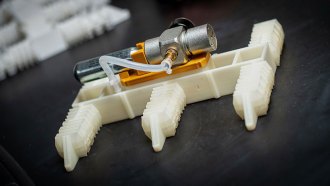
This 3-D printed robot runs on air, not electricity
The soft, flexible robot can cover uneven ground and even walk underwater.
- Life
Research without lab animals? New tech is making it possible
For decades, scientists have worked to phase out the use of animals in research. AI, ‘lungs’ on a chip and more are bringing that goal closer.
- Environment
Eco-friendly sunscreen? That’s bananas!
Bananas make their own natural sunscreens. A teen thinks these could work to protect our skin as well, while being safe for aquatic life.
- Materials Science
This electric ‘slime’ might help injuries heal faster
Our bodies call in healing cells with an electrical signal. When stretched or squeezed, this gel makes electricity that could boost that alert.
- Tech
Soft helpers and bio-inspired tech: a match made in robot heaven
Hugging toys offer emotional support to anxious kids and slithering snake-like robots may bring rescue aid to people trapped in dangerous conditions.
- Chemistry
Teen finds cheaper way to make drugs against killer viruses
This drug-making achievement also nabbed the top award — and $100,000 in prize money — at the 2025 Regeneron ISEF competition.
- Artificial Intelligence
Teen’s software for spotting AI-generated text just got personal
Rather than seeking generic signs of AI-generated text, it compares two texts to confirm they both share a writer’s unique style.
- Materials Science
A beautiful blue butterfly wing offers a new way to study cancer
Once a morpho butterfly wing is placed atop a thin slice of tissue, shining polarized light through it can help reveal how likely breast cancer is to spread.
- Materials Science
This engineer uses light to get hearts pumping
Pengju Li designed a new type of pacemaker to help doctors during open-heart surgery.
- Tech
Squirty gels bring food-like flavors to virtual reality
A new device recreates complex flavors including lemonade, coffee and fish soup by delivering a mix of chemicals.