HS-LS2-2
Use mathematical representations to support and revise explanations based on evidence about factors affecting biodiversity and populations in ecosystems of different scales.
- Life
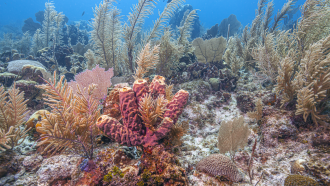
Scientists Say: Benthic
This ecological region teems with life — from coral to insect larvae to crabs.
- Animals
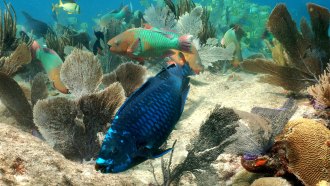
Parrotfish shape the future of coral reefs, one bite at a time
Could these colorful fish aid struggling coral? Yes, but not always. Parrotfish play a complex role in reefs — and sometimes may cause harm.
- Humans
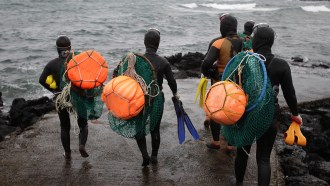
These Korean women spend more time underwater than any other humans
At an average age of 70, these divers in South Korea still forage in the sea for up to 10 hours a day. They spend more than half of that time underwater.
- Animals
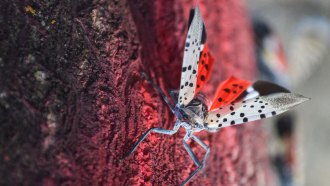
Quashing the spotted lanternfly may require help from other species
This invasive pest has spread to 17 U.S. states and may threaten vineyards. But bats, fungi, dogs and even trees may help halt the lanternfly's spread.
- Animals
Here’s a spider whose barf is worse than its bite
These critters, which often make their homes on houseplants, don’t bother injecting venom. The spiders just vomit it all over their tied-up prey.
- Environment
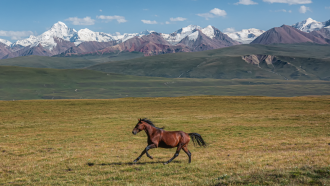
Scientists Say: Steppe
Expansive, windswept grasslands offer ample grazing for roaming herd animals and more.
- Ecosystems
Scientists Say: Ecosystem
The interplay between living things and the physical environment gives rise to Earth’s thriving, life-sustaining ecosystems.
- Space
Is the International Space Station too clean?
Testing surfaces on board the space station revealed low microbial diversity, something that’s been linked to health problems elsewhere.
- Health & Medicine
Scratching an itch has both good effects and bad
Mice that scratch itchy ears trigger more redness and swelling — but also may combat harmful bacteria.
- Animals
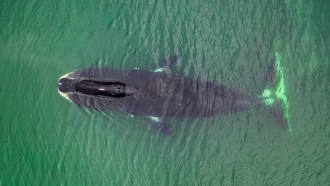
A changing Arctic current seems to be impacting bowhead whales
A teen researcher investigated bowhead whales and found their migrations may be responding to a changing sea current.
- Animals
Meet some of the longest-lived animals
Think a 100-year-old person is old? Not compared to the world’s longest-lived animals — some of which have lifespans of thousands of years.
- Ecosystems
Analyze This: In movies, wetlands often get a bad rap
Swamps in films are often linked to danger, death and strange things. But movies also highlight wetlands’ biodiversity and resources.