HS-LS4-1
Communicate scientific information that common ancestry and biological evolution are supported by multiple lines of empirical evidence.
- Fossils
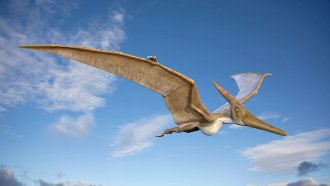
Let’s learn about pterosaurs
These ancient flying reptiles were not dinosaurs, but they were close relatives.
- Humans
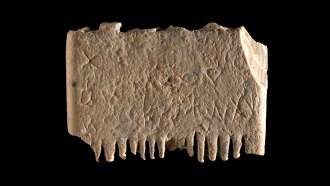
This ancient ivory comb reveals a wish to be free of lice
The comb bears the earliest known complete sentence written in a phonetic alphabet, researchers say.
- Archaeology
King Tut’s tomb still holds secrets 100 years after its discovery
New details of Tut’s story are still coming to light. Here are three things to know on the 100th anniversary of his tomb’s discovery.
- Fossils
Sprinting reptiles may have been forerunners of soaring pterosaurs
A new analysis of an old fossil supports the idea that winged pterosaurs evolved from swift and tiny two-legged ancestors.
- Genetics
Examining Neandertal and Denisovan DNA wins a 2022 Nobel Prize
Svante Pääbo figured out how to examine the genetic material from these hominid ‘cousins’ of modern humans.
- Animals
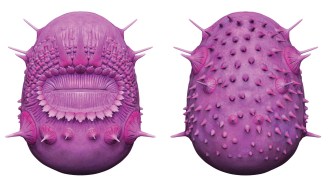
Bizarre ancient critter has spines but no anus
The spiny discovery moves this minion lookalike off a distant limb on the human family tree.
- Animals
A tiny microbe inspired this scientist’s big dreams
Marc Mapalo has discovered three species of tardigrades and studies fossils of these water bears to better understand how their bodies have changed over time.
- Animals
Ancient ‘ManBearPig’ mammal lived fast — and died young
Developing in the womb for a while — but being born ready to take on the world — may have helped post-dinosaur mammals rise to dominance.
- Animals
Warm feathers may have helped dinos survive mass Triassic die-off
Dinosaurs may have weathered freezing conditions about 202 million years ago, thanks to warm feathery coats.
- Archaeology
Bright-colored feathers may have topped pterosaurs’ heads
Fossil remains of a flying reptile hint that their vibrant crests may have originated 250 million years ago in a common ancestor with dinosaurs.
- Archaeology
Scientists Say: Denisovan
The Denisovans were a recently discovered population of ancient hominids.
- Earth
Cool Jobs: Bringing paleontology to the people
From museums to movies, these three paleontologists totally rock their connections with the public.