HS-LS4-1
Communicate scientific information that common ancestry and biological evolution are supported by multiple lines of empirical evidence.
- Animals
Smartphones can now bring Ice Age animals back to ‘life’
Scientists bring Ice Age creatures to life with augmented reality. You can view these creatures in your own world on a smartphone.
- Animals
One of the earliest meat-eating mammals was saber-toothed
Millions of years before the evolution of saber-toothed cats, a newly discovered "hypercarnivore" prowled the forests of what is now San Diego.
- Archaeology
Our species may have reached Europe while Neandertals were there
Archaeological finds from an ancient French rock-shelter show periodic settlements by both populations, just not at the same time.
- Animals
Mysterious kunga is the oldest known human-bred hybrid animal
People bred these animals — part donkey, part wild ass — some 4,500 years ago, probably for use in fighting wars.
- Animals
Scientists discover the first true millipede
The newfound deep-living species tunnels belowground using a whopping 1,306 legs!
- Animals
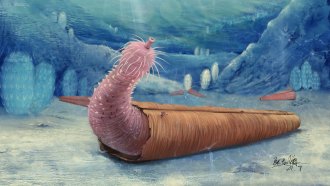
‘Penis worms’ could have been the original hermits
These soft-bodied critters lived in abandoned shells about 500 million years ago, a new study suggests.
- Animals
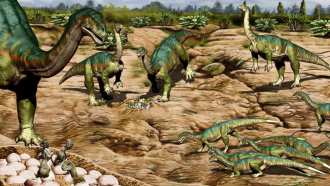
Fossils point to earliest dinosaurs that lived in herds
A fossilized family gathering of long-necked Mussaurus from 193 million years ago is the earliest evidence yet of herd behavior in dinos.
- Animals
Explainer: The age of dinosaurs
Take a trip back to the Mesozoic Era to explore how geologic events, ecosystems and evolution were connected during the so-called age of dinosaurs.
- Agriculture
The ultimate genealogical search hunts for our earliest ancestors
The complex search to identify humans’ most distant cousins is long, complex and far from straightforward. It’s also far from over.
- Animals
What biologists call a species is becoming more than just a name
The tree of life — evolution — has been reshaping how scientists name and classify organisms. Some want naming to reflect evolutionary groups even more.
- Animals
Will the woolly mammoth return?
Scientists are using genetic engineering and cloning to try to bring back extinct species or save endangered ones. Here’s how and why.
- Animals
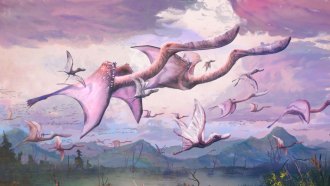
Baby pterosaurs may have been able to fly right after hatching
A bone crucial for lift-off was stronger in hatchling pterosaurs than in adults. The baby reptiles also had shorter, broader wings than grown-ups.