MS-LS1-1
Conduct an investigation to provide evidence that living things are made of cells, either one cell or many different numbers and types of cells.
- Plants
Explainer: How to identify tree species in the winter
No leaves to be found? Then buds, bark and branches might help you ID what tree you see.
- Microbes
Under the microscope, this biologist sees a tiny jungle
Sally Warring has long been captivated by the beauty of mostly single-celled life forms called protists.
- Physics
The movie Frozen inspired the icy, 3-D printing of blood vessels
Ice guides a 3-D printing method to make realistic, artificial blood vessels. One day, such vessels could be used in lab-grown organs.
- Life
Bacterial fossils exhibit earliest hints of photosynthesis
Microscopic fossils from Australia suggest that some bacteria evolved structures for oxygen-producing photosynthesis by 1.78 billion years ago.
- Life
Scientists Say: Protist
Unified by a few key traits, these diverse organisms come in all shapes and sizes.
- Tech
Synthetic biology aims to tackle disease and give cells superpowers
DNA machines and protein-mimicking nanotech could replace broken machinery in cells or even lead to made-from-scratch synthetic life.
- Health & Medicine
Stem cells can help build lab-grown organs that mimic real life
Making such organoids with 3-D printing and other tech can help researchers learn more about many troubling and potentially deadly disorders.
- Animals
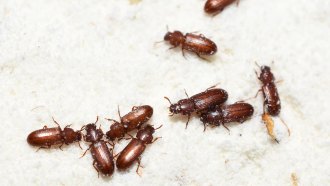
These beetles ‘drink’ water using their butts
Red flour beetles can survive in very dry environments. New research shows how the beetles can suck water from the air using their rear ends.
- Environment
Microplastic pollution aids viruses and prolongs their infectivity
The tiny plastic bits give these germs safe havens. That protection seems to increase as the plastic ages and breaks into ever smaller pieces.
- Environment
Bacterial ‘living wires’ could help protect the seas and climate
Long, thin bacteria that conduct electricity may be able to help clean up oil spills and reduce emissions of methane, a powerful greenhouse gas.
- Animals
Sea creatures’ fishy scent protects them from deep-sea high pressures
TMAO’s water-wrangling ability protects a critter’s critical proteins — including muscle — from crushing under deep ocean pressures.
- Genetics
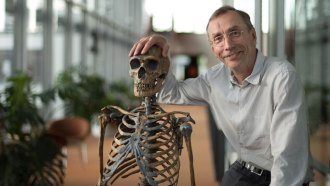
Examining Neandertal and Denisovan DNA wins a 2022 Nobel Prize
Svante Pääbo figured out how to examine the genetic material from these hominid ‘cousins’ of modern humans.