MS-LS1-1
Conduct an investigation to provide evidence that living things are made of cells, either one cell or many different numbers and types of cells.
- Animals
See the world through a jumping spider’s eyes — and other senses
Scientists are teasing out the many ways the spiders’ vision, listening and taste senses differ from ours
- Chemistry
Explainer: What are fats?
A fat molecule's three long chains of carbon and hydrogen atoms repel water, stash energy and keep living things warm — even in the bitter cold.
- Animals
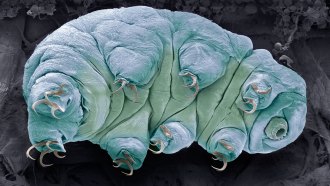
Living mysteries: Why teeny-weeny tardigrades are tough as nails
Tardigrades often live in cool, damp moss. Their cushy life has somehow prepared them to survive the lethal radiation of outer space.
- Ecosystems
Recycling a climate-warming gas could make ‘greener’ farmed fish
Instead of warming the climate, methane gas can be collected to help farmers. Along the way, it may also save some fish.
- Life
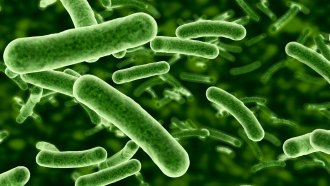
Scientists Say: Bacteria
Bacteria get a bad rap for making people sick, but only a tiny portion of these single-celled creatures cause disease.
- Life
In blazing heat, some plants open leaf pores — and risk death
When heat waves and droughts collide, water is precious. Some thirsty plants try to cool off by opening tiny pores — only to lose water even faster.
- Microbes
Genes point to how some bacteria can gobble up electricity
A new study shows how some microbes absorb and release electrons — a trait that may point to new fuels or ways to store energy.
- Materials Science
Analyze This: Hardened wood can make sharp steak knives
Researchers treated wood to make it hard and dense. Out of it, they carved sharp knives and nails that could substitute for ones made of steel.
- Life
Let’s learn about microbes
There may be a billion species of microorganisms on Earth — but scientists have only discovered a small fraction of them.
- Life
No animal died to make this steak
The ribeye steak is the first of its kind, and the latest in a growing list of meats printed with a 3-D bioprinter instead of being harvested from an animal.
- Brain
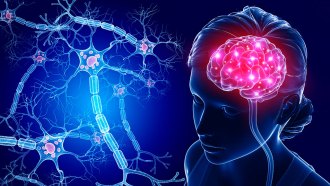
Explainer: What is a neuron?
From the moment you are born, cells called neurons sense information, process it and then pass it on. Neurons allow you to do everything that you do.
- Brain
Search for ‘rewards’ is big driver in remodeling a teen’s brain
Communication ‘highways’ in the brain undergo a major overhaul as children morph into adults. Dopamine plays a big role in this remodeling project.