MS-LS1-1
Conduct an investigation to provide evidence that living things are made of cells, either one cell or many different numbers and types of cells.
- Health & Medicine
Explainer: What is a coronavirus?
Coronaviruses are a diverse family of disease-causing agents. Some cause the common cold. Newer ones have emerged to pose more serious threats to people.
- Materials Science
Self-powered surface may evaluate table-tennis play
Scientists at the Georgia Institute of Technology built a 'smart' surface on which to play table tennis. It can track the location, speed and direction of the ball.
- Health & Medicine
Globetrotting microbes in airplane sewage may spread antibiotic resistance
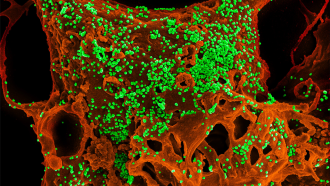
Along with harder-to-kill microbes, airplane sewage contains a diverse set of the genes that let bacteria evade antibiotics.
- Health & Medicine
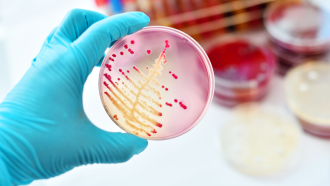
Drug-resistant germs kill some 35,000 Americans each year
The new mortality rate may be way low, some experts say. Also troubling are two new germs that have emerged as big and urgent threats.
- Chemistry
Like Magneto? Microcrystals give magnets superpower over living cells
New iron-rich protein crystals could help researchers better understand the nerve cells that control movement and sensation. All they need are magnets.
- Life
A new spin on lab-grown meat
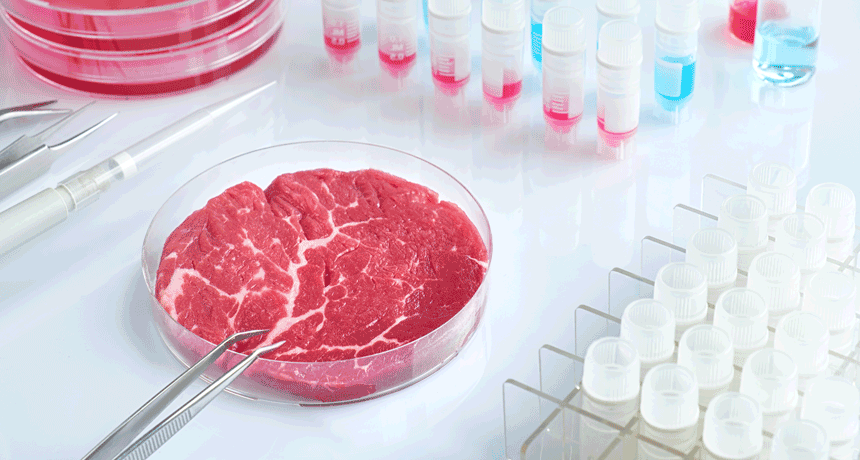
A technique inspired by how cotton candy is spun could help produce lab-grown meat at a lower cost and on a bigger scale.
- Life
Explainer: Prokaryotes and Eukaryotes
Prokaryotes tend to be small and simple, while eukaryotes have embraced a highly organized lifestyle. These divergent approaches to life have both proved very successful.
- Health & Medicine
Scientists discover how norovirus hijacks the gut
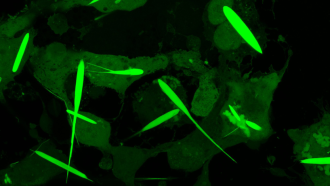
Noroviruses make people vomit, but scientists didn’t actually know why. It now turns out that those viruses cause their misery by attacking special “tuft” cells in the gut.
- Animals
Orca snot leads to a whale of a science-fair project
DNA found in the mucus of orcas suggests that even though the traits of family pods may differ, these marine mammals all appear to belong to a single species.
- Materials Science
New black hair dye uses no harsh chemicals
Scientists have developed a new black-carbon-based hair dye. Instead of using damaging chemicals to dye hair, flexible flakes of carbon coat each strand.
- Chemistry
Banana plant extract can slow how fast ice cream melts
Food scientists now show that adding these tiny plant particles to ice cream may delay the rate at which this treat melts into a soupy mess.
- Health & Medicine
Inked mice hint at how tattoos live on
Tattooed mice challenge our current understanding of how tattoos stay in humans.