MS-PS1-1
Develop models to describe the atomic composition of simple molecules and extended structures.
- Materials Science
New twist can hush — even cloak — some sounds
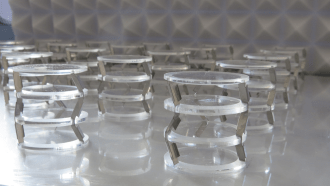
Swiss engineers developed clear, spiral structures to make a new sound-dampening system. Those twists block some vibrations and lets others through.
- Chemistry
Like Magneto? Microcrystals give magnets superpower over living cells
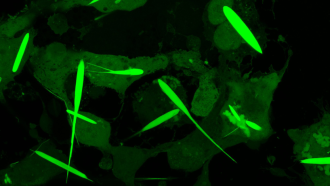
New iron-rich protein crystals could help researchers better understand the nerve cells that control movement and sensation. All they need are magnets.
- Chemistry
Chemistry’s ever-useful periodic table celebrates a big birthday
2019 is the International Year of the Periodic Table. But the traditional chart is just one of many shapes that chemists and other scientists have developed to organize the elements.
- Chemistry
Explainer: What are acids and bases?
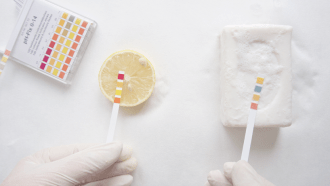
These chemistry terms tell us if a molecule is more likely to give up a proton or pick up a new one.
-
- Climate
Explainer: Why sea levels aren’t rising at the same rate globally
The ocean is rising all over the world. The rise seems speedier in some places. What gives? Many factors, it turns out, affect where — and why — the tide gets high.
- Earth
Explainer: CO2 and other greenhouse gases
Carbon dioxide is just one of several chemicals that contribute to the greenhouse effect. Nitrous oxide, methane and CFCs are other big contributors.
- Animals
In a colony, king penguins act like a liquid
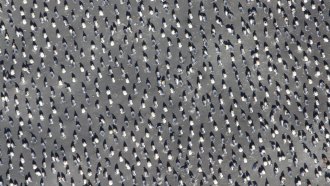
Is this a living liquid? King penguins move around within their colonies, clearing out some space, and then refilling it. That behavior resembles a liquid, scientists conclude.
- Chemistry
Banana plant extract can slow how fast ice cream melts
Food scientists now show that adding these tiny plant particles to ice cream may delay the rate at which this treat melts into a soupy mess.
- Animals
Cool Jobs: Diving for new medicines
Scientists mix research with underwater adventure as they search the oceans for new chemicals to treat infections, cancer and more.
- Chemistry
Explainer: What are polymers?
Polymers, whether natural or artificial, are big molecules made by linking up smaller repeating chemical units. The most common “backbones” for polymers are chains of carbon or silicon, each of which can bond to four other atoms.
- Chemistry
To test pill coatings, try a stomach in a flask
Which pain reliever should you buy? The tablet, gel tab or compressed caplet? A teen did an experiment to find out.