MS-PS1-1
Develop models to describe the atomic composition of simple molecules and extended structures.
- Chemistry
Explainer: What is a metal?
Metals can bend and pull without snapping, and conduct electricity. The reason: Their atoms tend to lose electrons to neighboring atoms.
- Chemistry
Scientists Say: Silicon
The chemical element silicon is used to make everything from bricks to cookware to electronics.
- Chemistry
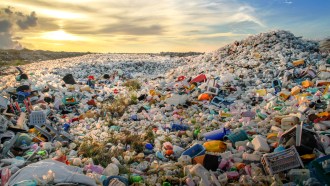
A new way to make plastics could keep them from littering the seas
Borrowing from genetics, scientists are creating plastics that will degrade. They can even choose how quickly these materials break down.
- Microbes
Genes point to how some bacteria can gobble up electricity
A new study shows how some microbes absorb and release electrons — a trait that may point to new fuels or ways to store energy.
- Chemistry
Scientists Say: Electron
Electrons are negatively charged particles. They are attracted to the positively charged particles in the center, or nucleus, of an atom.
- Chemistry
Chemists win Nobel Prize for faster, cleaner way of making molecules
Both scientists independently came up with new process — asymmetric organocatalysis. That name may be a mouthful, but it’s not that hard to understand.
- Tech
Synthetic trees could tap underground water in arid areas
They also could also help coastal residents mine fresh water from salty sources.
- Chemistry
Explainer: Ions and radicals in our world
When atoms get an electric charge, they act very differently. Now called ions, these are behind many aspects of chemistry, including acids and batteries.
- Physics
Nuclear clocks are nearly here
More precise clocks could improve technologies such as GPS and help scientists test major ideas in science.
- Brain
Father-son bond inspires sweets that model the shapes of molecules
These bite-sized gummy candies could spark interest in the world of chemistry, especially among students who can’t see.
- Physics
Scientists Say: Bond
In chemistry, this attachment between atoms forms because of the power of attraction. Chemical bonds make up every solid object on Earth.
- Chemistry
New recycling technologies could keep more plastic out of landfills
Recycling plastics is really hard — especially into useful materials. But new chemical tricks could make recycling easier.