MS-PS1-1
Develop models to describe the atomic composition of simple molecules and extended structures.
- Chemistry
Explainer: What are chemical bonds?
When various particles, atoms, ions or molecules come together to form a substance, they are held together with chemical bonds.
- Climate
Let’s learn about snow
Snow is more than just frozen water vapor. Scientists are studying everything from its shape to other planets where snowflakes fall.
- Physics
Physicists have clocked the shortest time span ever
The experiment revealed how long it takes light to cross a hydrogen molecule: just a couple hundred zeptoseconds.
- Chemistry
Scientists Say: Molecule
A molecule is a group of atoms linked with chemical bonds. It’s the smallest particle of a substance that has all of its chemical properties.
- Chemistry
Here’s how to make flip-flops biodegradable
Innovative flip-flops made from an algae-based plastic decompose in soil or compost. The comfy shoes also avoid use of fossil fuels.
- Animals
Polluting microplastics harm both animals and ecosystems
Researchers are beginning to uncover the real-world impacts of polluting microplastic bits on animals and the ecosystems they inhabit.
- Chemistry
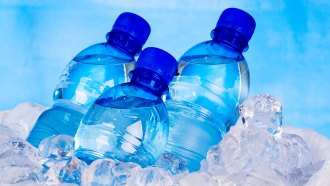
Build ice towers with bottled water and ice
Pour out liquid water into a solid ice tower. We outline the conditions you’ll need to turn this demonstration into a super-cool experiment.
- Chemistry
Stinky success: Scientists identify the chemistry of B.O.
They turned up the enzyme in bacteria behind that underarm stench. Understanding how it works could pave the way to new types of deodorant.
- Physics
Science offers recipes for homemade coronavirus masks
New studies provide data on what types of mask materials protect best against the virus that causes COVID-19. They also point to the value of a really snug fit.
- Environment
Here’s one way to harvest water right out of the air
Need water but you have no access to rain, lakes or groundwater? Materials known as metal-organic frameworks could be used to slurp that water from the air, new data show.
- Chemistry
Batteries should not burst into flames
Because lithium-ion batteries power modern life, they need to store a lot of energy. Now scientists are focusing on making them safer.
- Chemistry
Converting trash to valuable graphene in a flash
Flash heating of carbon-rich wastes creates graphene, which has many commercial uses.