MS-PS1-3
Gather and make sense of information to describe that synthetic materials come from natural resources and impact society.
- Brain
Explainer: What are opioids?
Opioid drugs can kill pain, but they can also kill people. Here’s how.
- Chemistry
Explainer: What are polymers?
Polymers, whether natural or artificial, are big molecules made by linking up smaller repeating chemical units. The most common “backbones” for polymers are chains of carbon or silicon, each of which can bond to four other atoms.
- Physics
Explainer: Quantum is the world of the super small
The word quantum often gets misused. What does it mean? Think small. Really, really small.
- Chemistry
To test pill coatings, try a stomach in a flask
Which pain reliever should you buy? The tablet, gel tab or compressed caplet? A teen did an experiment to find out.
- Chemistry
BPA-free plastic may host BPA-like chemical, teen finds
Something has to replace the BPA in ‘BPA-free’ plastics. A teen has been probing what that is.
- Materials Science
Teen’s invention could help light up bikes at night
A teen researcher from Georgia has developed a light that could replace reflectors on bike wheels. Flexing tires provide all the power it needs.
- Microbes
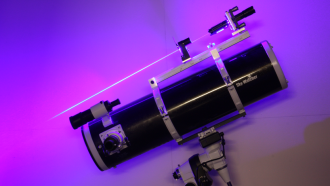
Tweaked germs glow to pinpoint buried landmines
Finding landmines could become much safer with a new technology. It uses genetically modified bacteria that glow under laser light.
- Materials Science
A better way to stop a bullet?
A teen researcher's tests suggest that fabric body armor might stop bullets better if it were woven using a three-fiber, triangular mesh instead of the typical two-fiber-mesh configuration.
- Physics
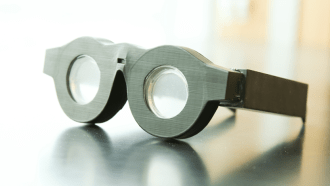
Auto-focus eyeglasses rely on liquid lenses
Engineers have designed what could be the last eyeglasses anyone would need. Right now, they’re bulky but smart. Liquid lenses are key to their adjustability — and those lenses focus automatically.
- Animals
Cool Jobs: A world aglow
Three scientists probe how the natural world makes light, in hopes of using this information to design new and better products.
- Physics
How to chill an object by sending its heat into space
Researchers have designed a device that can cool an object by radiating its energy into outer space. Think of it as a solar panel in reverse.
- Chemistry
How to spin synthetic spider silk
A new method for spinning artificial spider silk combines parts of proteins from two species and mimics what happens in a spider’s silk-forming gland.