MS-PS1-3
Gather and make sense of information to describe that synthetic materials come from natural resources and impact society.
- Materials Science
Let’s learn about microplastics
Microplastics have turned up everywhere from the highest mountains to the bottom of the ocean — and even inside animals and people.
- Tech
A shape-shifting robotic tooth-cleaner might one day brush for you
A swarm of billions of magnetic, bacteria-killing nanoparticles can be shaped into bristles to fit any surface, including between teeth.
- Materials Science
These fabrics change color as they stretch
Stretchy, color-shifting cloth may lead to new art, fashions and sensors. A century-old Nobel-prize-winning invention served as its inspiration.
- Animals
Sea creatures’ fishy scent protects them from deep-sea high pressures
TMAO’s water-wrangling ability protects a critter’s critical proteins — including muscle — from crushing under deep ocean pressures.
- Life
Let’s learn about modern Frankensteins
Modern scientists are creating strange new combinations of living tissue and trying to give dead things new life.
- Chemistry
Lego-like way to snap molecules together wins 2022 chemistry Nobel
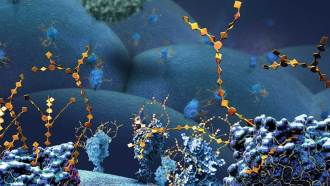
This so-called ‘click chemistry’ allows scientists to build complex molecules in the lab and in living cells.
- Chemistry
No trees were harmed to 3-D print this piece of wood
How clever! Scientists used print-speed adjustments to control how flat, 3-D printed shapes morph into complex wooden objects.
- Materials Science
Laser light transformed plastic into tiny diamonds
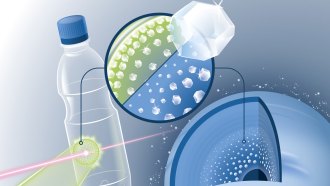
The technique could be used to make nanodiamonds for quantum devices and other technology.
- Chemistry
New meat-scented food flavoring comes from sugar — and mealworms
Insects could become a protein-rich part of the human diet. This new research aims to help people get past the ick of eating insects.
- Chemistry
Recipes for modern beauty products aren’t so modern after all
An art historian has combined forces with chemists to uncover the science behind cosmetics used about 500 years ago.
- Chemistry
Cool Jobs: Scientific glassblowers shape science
Glass has played a major role in research for centuries. Today’s artisans work at the forefront of discovery.
- Animals
The top side of an elephant’s trunk is surprisingly stretchy
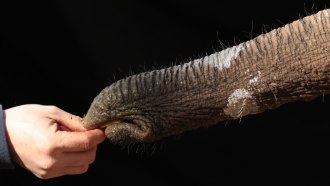
Research on elephant trunks could inspire new artificial skins for soft robots.