MS-PS1-3
Gather and make sense of information to describe that synthetic materials come from natural resources and impact society.
- Archaeology
The earliest known pants are surprisingly modern — and comfy
This 3,000-year-old garment was not only stylish but also functional. By recreating it, scientists also unraveled its complex and multicultural origins.
- Chemistry
Scientists Say: Cellulose
Cellulose is an abundant natural polymer found in plants and algae. It’s used to make everything from paper to clothing.
- Earth
Widely used pesticides may threaten Earth’s ozone layer
Data show a major class of long-used “eco-friendly” copper chemicals unexpectedly react with soil, making gases harmful to Earth’s protective ozone layer.
- Earth
Scientists Say: Pollution
Pollution is any substance or form of energy released into the environment that is harmful to people or other living creatures.
- Chemistry
Clothes dryers may be a major source of airborne microplastics
Scientists thought washing machines were a leading contributor of microplastics. Now it appears dryers may be an even bigger problem.
- Materials Science
Let’s learn about glass
Unlike the atoms in other solids, the atoms in glass don’t exist in an orderly crystal structure. They’re more jumbled up, like the atoms inside liquids.
- Tech
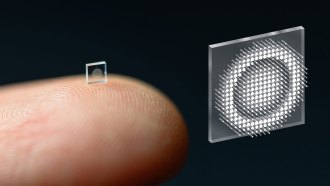
This crumb-sized camera uses artificial intelligence to get big results
Researchers have developed a camera the size of a coarse grain of salt that takes amazingly clear photos.
- Chemistry
Snail slime + gold could boost the power of sunscreens and more
These two strange ingredients could make skin-care products that are better for both our skin and the environment.
- Chemistry
Explainer: What is a metal?
Metals can bend and pull without snapping, and conduct electricity. The reason: Their atoms tend to lose electrons to neighboring atoms.
- Materials Science
Analyze This: This material for 3-D printing is made by microbes
Bacteria with tweaked genes pump out proteins that can be used in a 3-D printer. With microbes in the mix, the living ink can make drugs or suck up chemicals.
- Chemistry
Could reusable ‘jelly ice’ cubes replace regular ice?
These hydrogel “jelly ice cubes” are made mostly of gelatin and water. They won’t melt, even when thawed, and may provide new food cooling options.
- Chemistry
Scientists Say: Silicon
The chemical element silicon is used to make everything from bricks to cookware to electronics.