Waves and Their Applications in Technologies for Information Transfer
- Animals
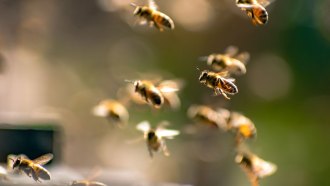
Analyze This: How many insects are in the air?
Weather data have helped estimate the density of flying insects in U.S. skies. That could help track climate change’s impact on insects.
- Physics
Physics explains why sneakers squeak on the basketball court
We’re hearing a shoe’s sole wrinkling in bursts that repeat thousands of times each second.
- Physics
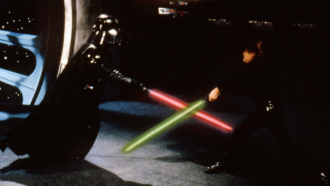
Could a Star Wars lightsaber work?
The main problem with real-world lightsabers is that they would pass through each other. This means no intergalactic duels between Jedis and Siths.
- Space
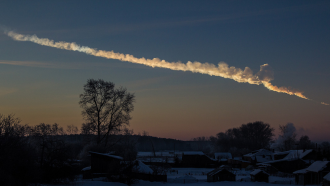
Scientists Say: Bolide
It starts as a flash. Then comes the sonic boom. The boldest meteors often go out with a bang.
- Physics
Could a person ever wield lightning as a weapon?
From the shocking powers of electric eels to laser-guided lightning, aiming electricity is more real than it sounds.
- Animals
Is it possible to be invisible?
Fiction is full of characters with the power to vanish. But some animals have real-life ways to become nearly invisible.
- Environment
Nuclear weapons tests many decades ago have left a radioactive legacy
Decades of aboveground nuclear weapons tests, starting in the 1950s, lightly littered the planet with toxic fallout, which appears to have sickened some people.
- Fossils
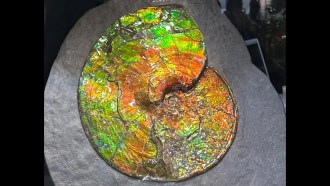
Here’s why ammolite gems have a rainbow shimmer
The fossils’ fabulous colors arise from delicate assemblies of crystal plates.
- Materials Science
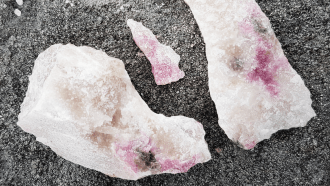
Scientists Say: Tenebrescence
Under ultraviolet light, some minerals adopt long-lasting new hues.
- Humans
Scientists Say: Chronohygiene
Artificial lights and other aspects of modern life can confuse our body’s internal sleep clock. But a few minor changes may grant us much-needed control.
- Physics
Here’s how to levitate something without magic
Levitation may seem like fantasy. But all it takes is a little physics — and sound waves, magnetism or electricity.
- Animals
Rudolph’s red nose could glow through bioluminescence
Simple chemistry could give the reindeer his iconic red snout. But physics would make it look different colors to anyone who spied Rudolph from the ground.