Life
- Earth
Let’s learn about rivers
Rivers vary a lot in size and terrain, but all share a few basic features.
- Life
Scientists Say: Biodiversity
The coral reefs at Komodo, one of the Lesser Sunda Islands in Indonesia, are among the most diverse ecosystems on Earth.
- Animals
Here’s a spider whose barf is worse than its bite
These critters, which often make their homes on houseplants, don’t bother injecting venom. The spiders just vomit it all over their tied-up prey.
- Health & Medicine
Sleeping in — but not too much — may ease anxiety
Getting up to two hours of weekend catch-up sleep lowers anxiety in teens, new research shows.
- Chemistry
Uncover leaves’ hidden colors in this science activity
Let’s use a technique called paper chromatography to separate the pigments lurking in tree leaves.
- Humans
A real-life vampire probably couldn’t survive on blood alone
Vampires often have human bodies. To survive on blood, they’d need to shed millions of years of evolution.
- Animals
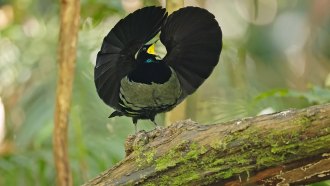
Birds of paradise have a newly discovered glow
Many male birds of paradise have bellies, bills and other parts that glow under certain types of light. This special gleam may help them woo mates.
- Genetics
Scientists Say: Genome
This complete set of DNA carries all the basic “how-to” instructions an organism needs to grow, develop and live.
- Genetics
DNA reveals the origin of East Asia’s favorite sweet bean
Where those red beans — also called adzuki — came from had been murky. A new study says it all started in Japan.
- Fossils
New clues about dino speed come from birds strutting through mud
Fossilized footprints can help calculate how fast dinosaurs moved. But tests with guinea fowl show that past estimates might not be right.
- Life
Fungi have been ‘zombifying’ insects for 99 million years
Two bits of ancient amber sitting in a lab basement hold evidence of a fungus that’s become famous for controlling the minds of its victims.
- Animals
Frogs evolved a wide variety of vocal sacs to amplify their ribbits
Maybe you've seen frogs with ballooning throats, but what about pop-out poofs and fat ear bumps?