Life
- Fossils
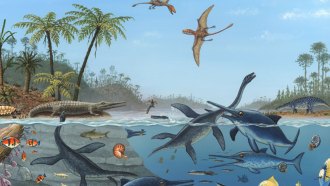
That’s no dino!
Not all ancient reptiles were dinosaurs. Some soared, many swam the seas and still others looked like dinos—but actually weren’t.
- Genetics
A germ stopper for blood products
A new system can disable almost all viruses or bacteria that are lurking in donated blood platelets and plasma.
- Health & Medicine
MERS virus hits South Korea hard
MERS — a killer viral disease — emerged for the first time only three years ago. That was in the Middle East. Now it has spread to Asia.
- Life
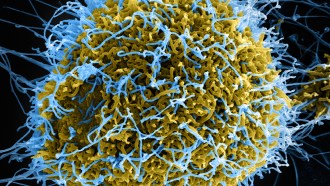
Explainer: What is a virus?
Viruses cause many of the world’s common diseases. These germs reproduce by hijacking the cells of their host.
- Animals
Biowarfare saves bats from killer fungus
Good news for bats. Those infected with white-nose syndrome may be cured by a brief exposure to fumes from therapeutic bacteria.
- Genetics
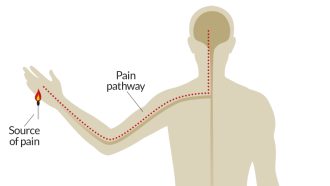
Altered gene leaves people totally painfree
That’s not a good thing for these people. Still, it could lead to a new class of drugs to help people who now suffer from chronic pain.
- Fossils
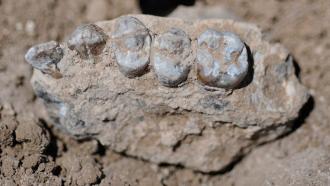
Fossil find adds a relative to our family tree
Lucy is the best known of our early ancestors. Now, a new fossil from Ethiopia suggests a second pre-human species lived alongside her kind.
- Animals
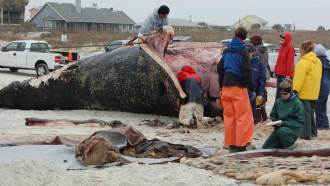
Scientists Say: Autopsy and Necropsy
Sometimes when animals die, they need to be investigated. These examinations have two special names. One is for people, the other for non-human animals.
- Plants
Using plants to solve environmental problems
Problems in their communities suggested good research projects to three teens. Each wanted to tackle a different issue, from pollution to world hunger. To learn more about these issues, they turned to their local ponds, wetlands and gardens.
- Life
Scientists Say: Taphonomy
Studying what happens to plants and animals after they die can teach us about ecosystems and evolution. This study has a special name.
- Animals
This is no cold fish!
The opah is the fish closest to the whole-body warm-bloodedness typical of mammals and birds. This trait may give the species an edge in the ocean’s cold depths.
- Animals
The bugs within us
Hordes of bacteria live inside people and other animals. This ‘microbiome’ can affect the development of the blood-brain barrier, food choices — even mating.