Life
- Brain
Studying? Don’t answer that text!
Homework time? Put away the cell phone. Responding to texts gets in the way of learning and test-taking, teen researchers show.
- Plants
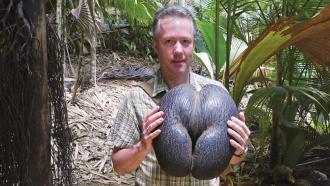
Picture This: The world’s biggest seed
This monster seed develops on a super-slow-growing island palm. Key to that palm’s survival are leaves that funnel fertilized water to nutrient-starved roots.
- Genetics
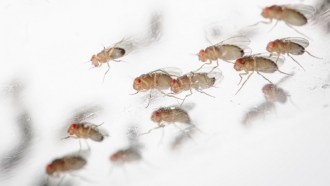
Catching ZZZs may retrieve lost memories
Forgetful? Maybe you’ve forgotten to get enough shuteye. A study in fruit flies suggests that a good sleep can boost their ability to remember things.
- Animals
Pesticides offer bees a risky allure
Honeybees and bumblebees sometimes cannot taste or avoid pesticides called neonicotinoids. And that may expose some of these important pollinators to harm.
- Brain
Scientists Say: MRI
MRI is a technique used to diagnose diseases and to study the body. The machine can map internal structures, all the way down to tiny blood vessels.
- Animals
Picture This: The real ‘early bird’
Long before dinosaurs went extinct, birds were emerging on Earth. These hummingbird-size wading birds are the earliest known ancestors of today’s birds.
- Animals
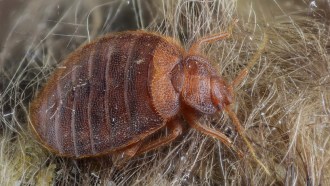
Return of the bed bug
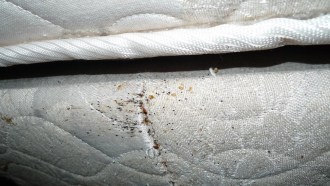
Bed bugs have staged a comeback over the past 15 years. The bloodsucking parasites succeeded through a combination of evolution and luck.
- Animals
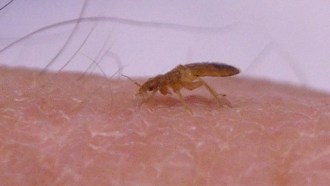
Scientists feed bed bugs (on purpose)
To study bed bugs in the lab, scientists had to first learn how to keep the blood-thirsty critters well fed. And that proved easier said than done.
- Animals
Explainer: Eek — what if you get bed bugs?
A bed bug infestation requires attention. Some treatments you can undertake yourself, but many are best left to professionals.
- Animals
4 reasons not to ignore signs of bed bugs
Here are important reasons not to ignore signs of bed bugs. Above all, an infestation carries real risks to your health and wellbeing.
- Brain
Hands-free but still distracted
When people aren’t distracted, they can see a traffic light change very quickly. But a teen scientist now shows that texting — even with a hands-free device — gets dangerously slow.
- Animals
What’s the buzz? A new mosquito lure
Broadcasting a fake buzz can lure male Aedes aegypti mosquitoes away from females. That could reduce populations of these annoying — and disease-causing — insects, reports a teen at the 2015 Intel ISEF competition.