Life
- Math
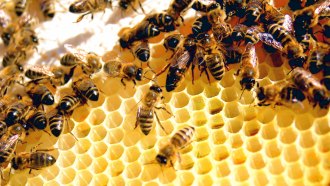
Bees and wasps devised the same clever math trick to build nests
During nest building, these insects add five- and seven-sided cells in pairs. This helps their colony fit together hexagonal cells of different sizes.
- Psychology
Scientists Say: Neurodivergent
This often-misunderstood word describes someone whose brain works a little differently from most.
- Animals
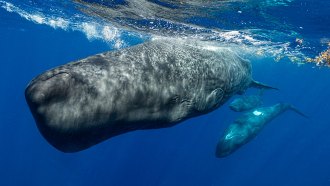
How artificial intelligence could help us talk to animals
AI translates human languages with ease. Researchers are now using this tech to analyze the sounds of whales, rodents and many other animals.
- Tech
What is my pet saying? Scientists are working to find out
Researchers are using artificial intelligence for pet-translation apps. One day, it might put into words what our furry friends are vocalizing.
- Animals
This bird nest becomes a ‘fortress’ using antibird spikes
The spikes were meant to keep birds away. But five nests found in Europe may use the bird deterrents for structure and to scare off predators.
- Tech
A ‘mini cyclone’ helps detect coronavirus in the air
A new device can detect from seven to 35 coronavirus particles per liter of air in minutes. That’s close to a PCR test’s sensitivity — but much quicker.
- Tech
Horses are inspiring this roboticist to build trustworthy robots
Computer scientist Eakta Jain is looking at human-horse interactions for ideas about how to design robots that work well with people.
- Oceans
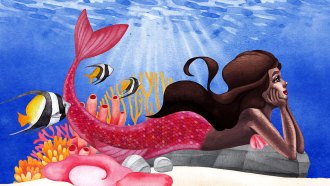
How would a mermaid sound underwater?
Human ears don’t work well in the water. A mermaid would need marine creature features to talk to and understand her aquatic friends.
- Fossils
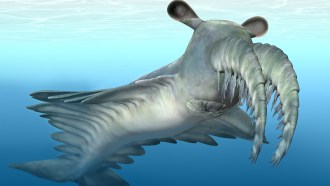
This bizarre ancient predator snagged soft prey
Scientists are rethinking how this extinct creature used the spiky limbs sticking out of its face to hunt.
- Animals
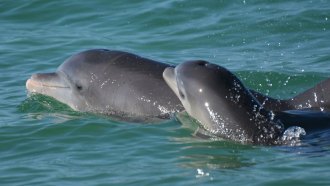
Bottlenose dolphin moms baby talk when their calves are near
Around their babies, bottlenose dolphin moms whistle with higher pitches. It’s similar to human parents speaking in baby talk.
- Animals
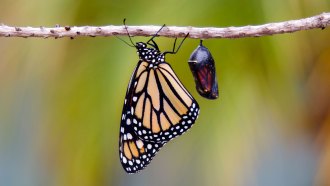
Explainer: What is metamorphosis?
Insects, amphibians and some fish undergo metamorphosis. But they’re not the only ones.
- Animals
Megalodons may have become megahunters by running hot
O. megalodon sharks were warm-blooded mega-predators. But when food sources dwindled, colder-blooded sharks may have had an evolutionary edge.