Life
- Animals
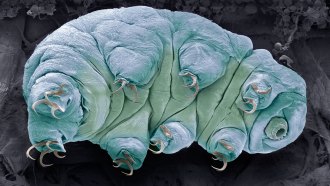
Living mysteries: Why teeny-weeny tardigrades are tough as nails
Tardigrades often live in cool, damp moss. Their cushy life has somehow prepared them to survive the lethal radiation of outer space.
- Brain
Nodding off may turn your creativity on
In an experiment, people who fell into a shallow sleep were more likely than non-sleepers or deep sleepers to discover a sly math trick.
- Animals
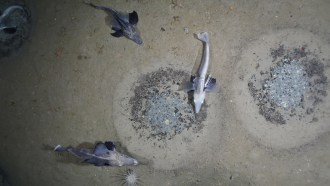
World’s biggest colony of nesting fish lives beneath Antarctic ice
Totally unexpected, it’s far, far larger than any other known community of nesting fish — fully one-third larger than the area of Washington, D.C.
- Ecosystems
Recycling a climate-warming gas could make ‘greener’ farmed fish
Instead of warming the climate, methane gas can be collected to help farmers. Along the way, it may also save some fish.
- Life
Scientists Say: Bacteria
Bacteria get a bad rap for making people sick, but only a tiny portion of these single-celled creatures cause disease.
- Life
In blazing heat, some plants open leaf pores — and risk death
When heat waves and droughts collide, water is precious. Some thirsty plants try to cool off by opening tiny pores — only to lose water even faster.
- Materials Science
Analyze This: This material for 3-D printing is made by microbes
Bacteria with tweaked genes pump out proteins that can be used in a 3-D printer. With microbes in the mix, the living ink can make drugs or suck up chemicals.
- Animals
Explainer: What is an invasive species?
These foreign organisms hitchhike, spread widely and stir up trouble in native ecosystems.
- Animals
Rewilding returns lost species to strengthen ecosystems
Restoring the missing species can help undo human-caused problems by aiding forests, slowing climate change and reducing wildfires.
- Animals
Scientists discover the first true millipede
The newfound deep-living species tunnels belowground using a whopping 1,306 legs!
- Animals
Let’s learn about snot
For humans, snot plays a key role in fighting off diseases. Other animals have found different uses for the slimy stuff.
- Animals
As the tropics warm, some birds are shrinking
Migratory birds are getting smaller as temperatures climb, studies had showed. New evidence shows dozens of tropical, nonmigratory species are, too.