Life
- Fossils
The challenge of dinosaur hunting in deep caves
Spelunkers aren’t the only people to find caves interesting. So do paleontologists. Though getting to work may be harrowing, they find it’s worth it.
- Animals
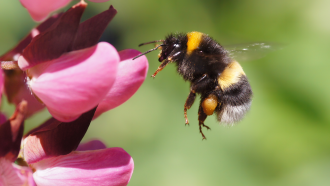
Pesticides can have long-term impact on bumblebee learning
Pesticide-laced nectar and pollen can permanently harm the brains of baby bumblebees.
- Animals
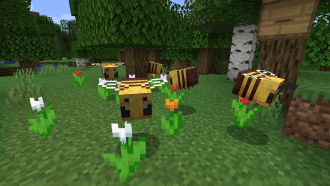
Minecraft’s big bees don’t exist, but giant insects once did
Big bees buzz in Minecraft. In our world, blocky bees might starve and be stuck on the ground. Yet long ago, giant insects did roam our planet.
- Microbes
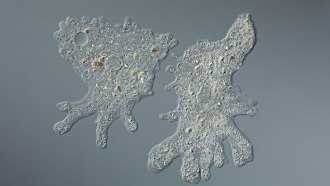
Scientists Say: Amoeba
Amoebas are single-celled microbes that move and eat with shape-shifting bulges that extend from their cells. Some are blobs. Others build a shell.
- Animals
Mice show their feelings on their faces
Pleasure, pain, fear and disgust — all can show on a mouse’s face. As computational analyses show, you just need to know what to look for.
- Environment
This ‘living’ concrete slurps up a greenhouse gas
Microbes help harden a mix of sand and gelatin into a living concrete that could interact with people and the environment in great new ways.
- Chemistry
Let’s learn about forensic science
Crime scene investigators analyze evidence with science, to connect criminals to crimes. And it’s often slower and different from what you see on TV.
- Earth
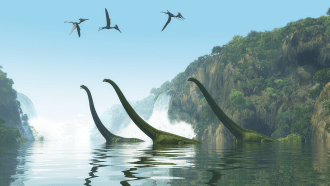
Scientists Say: Jurassic
During this time from about 200 million to 145 million years ago, dinosaurs reigned and many animals evolved, including birds and some early mammals.
- Animals
How to find the next pandemic virus before it finds us
Wild animals carry viruses that can sicken people. Monitoring those viral hosts that pose the greatest risk might help prevent a new pandemic.
- Microbes
Let’s learn about microbial communities
Communities of bacteria and other single-celled critters are all around us, on us — even inside us.
- Animals
Lots of frogs and salamanders have a secret glow
A widespread ability to glow in brilliant colors could make amphibians easier to track down in the wild.
- Animals
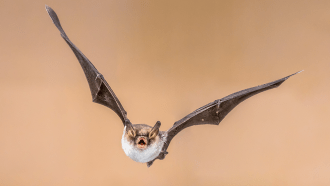
Scientists Say: Echolocation
This word describes a method that some animals use to sense their environments by making sounds and listening for their echoes.