Life
- Life
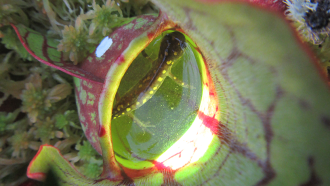
Meat-eating pitcher plants feast on baby salamanders
Scientists didn’t think meat-eating plants in North America ate vertebrates. They now know differently.
- Animals
Cool Jobs: Poop investigators
Far from just being waste, poop is loaded with clues to the health, biology and behavior of whatever body produced it.
- Brain
Brain ‘ripples’ appear just before you remember something
Nerve cells in the brain’s hippocampus, a key memory center, fire together a second or two before people begin to recall an image, data now show.
- Animals
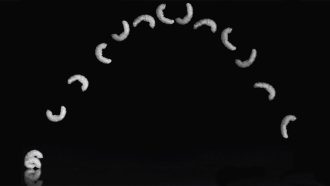
High-speed camera reveals the secrets of a legless larva’s leap
Research reveals how a blob of an insect can leap more efficiently than it crawls. Its body acts like a spring.
- Genetics
CRISPR enters its first human trials
A host of new human trials are using a gene-editing tool known as CRISPR to treat genetic diseases — from sickle cell and cancers to a blinding eye disorder.
- Life
Scientists Say: Zooxanthellae
Algae called zooxanthellae live in the tissue of coral and provide the coral with food and its color.
- Brain
Routine hits in a single football season may harm players’ brains
A group of college football players underwent brain scans after a season of play. The results suggest playing the sport could harm neural signaling.
- Animals
Scientists Say: Extinction
When the last member of a species dies, it’s gone forever. That species is extinct.
- Animals
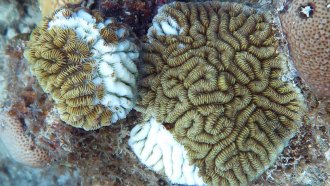
Mystery disease is killing Caribbean corals
Scientists are racing to pin down a new coral disease that’s “annihilating” whole species from Caribbean reefs.
- Genetics
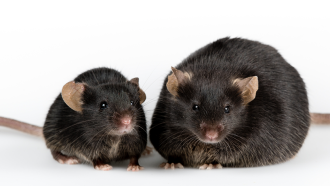
Obesity in mice caused by defects in their immune system
Subtle defects in T cell function alter rodents’ microbiome and fat absorption, providing hints of what might also be going on in people.
- Agriculture
As infections ravage food crops, scientists fight back
Diseases threaten important food crops like cocoa beans, wheat and citrus. Scientists are working to understand these infections — and fight back.
- Animals
Giving cats a special food may one day help people with cat allergies
Research by pet-food maker Purina aims to disable the major allergen carried in cat saliva. It’s a protein called Fel d1.