Space
- Physics
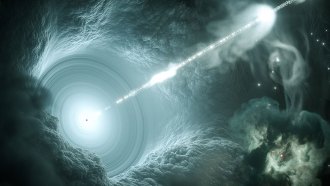
Scientists traced an incoming neutrino back to its galactic birthplace
The high-energy particle was born in a blazar 4 billion light-years away, scientists now report.
- Space
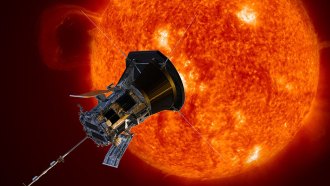
The Parker Solar Probe aims to touch the sun
The Parker Solar Probe is about to make a historic voyage to the sun.
- Microbes
Finding living Martians just got a bit more believable
What might a real Martian look like? Scientists have a better idea after identifying a buried liquid lake on the Red Planet.
- Physics
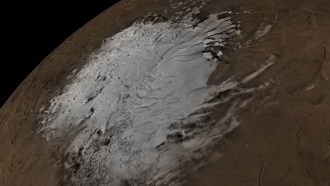
Mars appears to have a lake of liquid water
A 15-year-old Mars orbiter has spotted signs of a salty lake beneath the Red Planet’s southern polar ice sheets.
- Planets
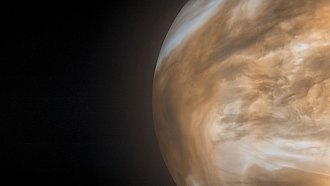
Thick atmosphere boosts how fast Venus spins
The thick atmosphere on Venus can change by a few minutes every day how long it takes the planet to rotate.
- Physics
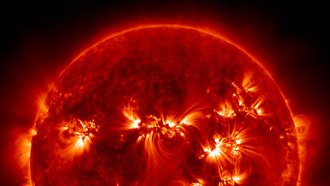
An active sun is a somewhat smaller sun
The sun grows and contracts a little over cycles lasting around 11 years, new data show. Changes in the strength of its magnetic fields may help explain this.
- Planets
Pluto’s heart has dunes of methane ice
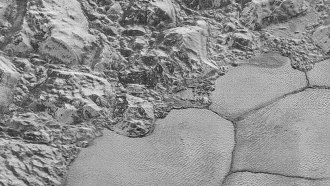
Pluto’s heart-shaped plains are striped with sand dunes. The sand is made of methane ice.
- Space
Scientists Say: Nebula
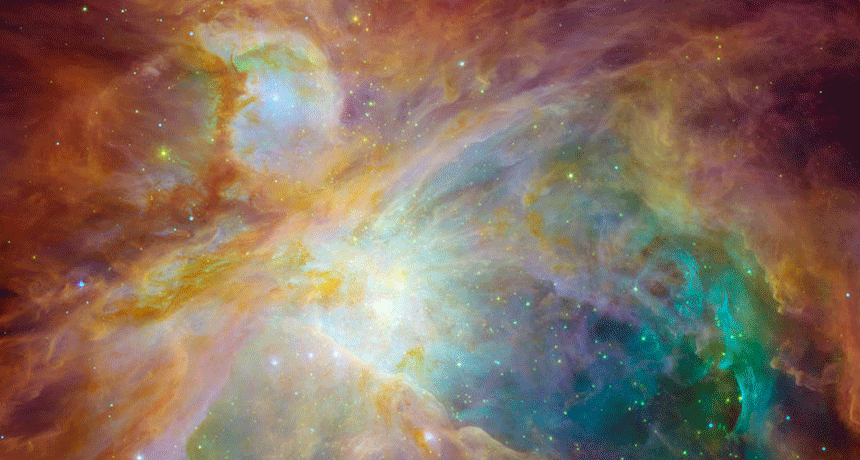
Nebulae are huge dust clouds in space. Some come from dying stars. Others are places where stars are born.
- Chemistry
Diamonds and more suggest unusual origins for asteroids
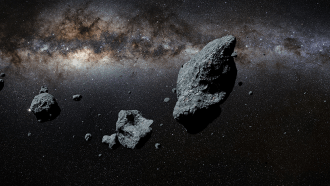
Inside a meteorite, scientists found sulfur and iron wrapped in tiny diamonds. Those gems hint the rock formed inside a long-lost planet.
-
- Chemistry
Asteroids may have delivered water to early Earth
Scientists shot mineral pellets at a simulated planet. It showed an impact wouldn’t have boiled off all of an asteroid’s water.
- Physics
Wireless devices crowd out cosmic radio signals and more
Cell phones and other devices emit radio waves that can interfere with important scientific research. That’s why researchers are seeking ways to share the radio spectrum.