All Stories
- Physics
You might someday ‘wallpaper’ your bedroom with this loudspeaker
This thin, flexible and lightweight loudspeaker could reduce noise in loud spaces. It also might enable listeners to experience sound in new ways.
- Planets
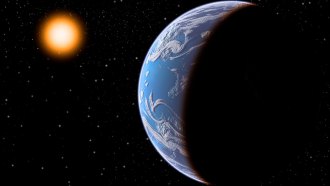
Scientists Say: Habitable Zone
The habitable zone is the region around a star where temperatures could be right for worlds to host liquid water.
- Physics
When dominoes fall, how fast the row topples depends on friction
Two types of friction help determine how quickly a line of dominoes collapses, computer modeling shows.
- Chemistry
Simple process destroys toxic and widespread ‘forever’ pollutants
Ultraviolet light, sulfite and iodide break down these PFAS molecules faster and more thoroughly than other methods.
- Animals
Butterfly ‘tails’ might be part of an escape tactic
Slender, tail-like extensions on their wings may help some butterflies survive attacks by hungry predators.
- Planets
Let’s learn about surviving a trip to Mars
Getting to and surviving on the Red Planet will take lots of innovation.
- Computing
Scientists Say: Supercomputer
These ultrafast computers perform complex calculations for research on cancer, quantum physics and more.
- Computing
A new supercomputer just set a world record for speed
Able to perform more than a quintillion calculations per second, it will allow scientists to study exploding stars, subatomic particles and more.
- Tech
Virtual critters evolve bodies that help them learn
A combination of evolution and learning may lead to more intelligent and agile robots.
- Animals
To test for COVID-19, a dog’s nose can match a nose swab
Dogs can sniff out COVID-19 cases as well as PCR tests can — and are better at ID’ing cases having no symptoms, a new study finds.
- Science & Society
Some scientists want serious research into UFOs. Here’s why
Science grapples with unknown phenomena all the time. Investigating “unidentified flying objects” shouldn't be different, researchers say.
- Earth
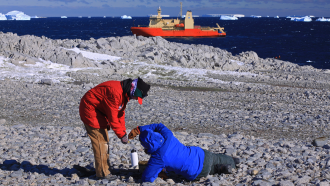
Uplifting Antarctic shores point to accelerating loss of glaciers
It appears the Pine Island and “Doomsday” Thwaites glaciers are losing ice — and shrinking faster — than at any time in the past 5,500 years.