All Stories
- Space
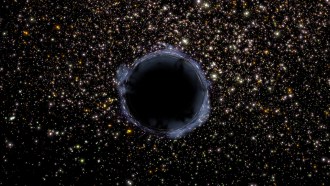
A massive rogue roaming our galaxy may be a black hole
Alternatively, this unseen wanderer might be a hefty neutron star. Whatever it is, its gravity caused starlight to be warped — and that gave it away.
- Physics
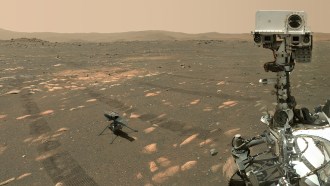
Noises sound totally different on Mars than on Earth. Here’s why
The Perseverance rover recorded the sound of laser pulses on Mars. Scientists used those recordings to determine the Martian speeds of sound.
- Animals
Some Greenland polar bears are surviving with very little sea ice
The ‘glacial mélange’ on which they’ve come to rely — a mix of ice, snow and slush — could be a temporary refuge for some polar bears.
- Animals
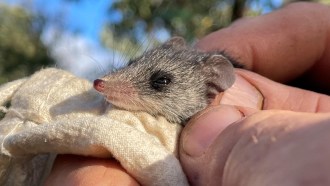
Palm-size marsupials may face extinction from wild ‘house’ cats
After surviving Australian bushfires, the Kangaroo Island dunnart is losing ground as it's targeted by hungry predators.
- Chemistry
Let’s learn about diamond
Diamond is born under extreme heat and pressure inside Earth and elsewhere in the universe.
- Tech
Scientists Say: Virtual reality
Virtual reality is an immersive, 3-D artificial environment created by a computer.
- Tech
This robotic finger is covered in living human skin
The advance brings super realistic cyborgs one small step closer to reality.
- Brain
Why teens can’t help tuning out mom’s voice
Teens often tune out what their mom is saying. Normal brain changes during adolescence could explain why, new research shows.
- Planets
Ancient volcanoes may have left ice at the moon’s poles
Volcanic eruptions billions of years ago may have produced several temporary atmospheres on the moon that held water vapor.
- Health & Medicine
Joggers run at an energy-efficient pace, new data show
Fitness trackers and treadmill tests show that a runner’s speed tends to vary little, regardless of the distance they run.
- Animals
‘Mystery monkey’ could mean its parent’s species may be in trouble
Changes to monkeys’ habitats — including some forest loss to oil palm plantations — might explain why this animal’s parents mated.
- Earth
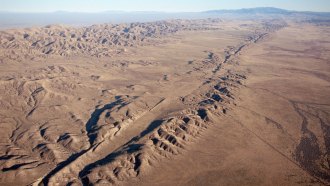
Scientists Say: Fault
A fault is a crack in Earth’s crust where pieces of rock scrape past each other.