All Stories
- Environment
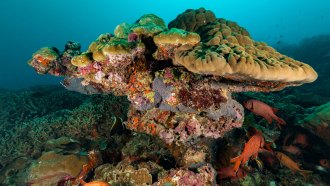
Analyze This: Corals stash microplastics in their skeletons
Scientists have wondered where the ocean’s microplastic pollution ends up. Corals may trap about 1 percent of particles in tropical waters each year.
- Chemistry
New cloth cools you when you’re hot, warms you when you’re cold
Scientists 3-D printed the new fabric, which has even more tricks up its sleeve — such as conducting electricity and resisting radio waves.
- Animals
Scientists Say: Migration
Migration involves the movement of animals or people from one place to another.
- Animals
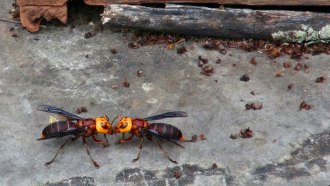
The scent of queen ‘murder hornets’ can lure males into traps
Traps baited with compounds found in the mating pheromone of hornet queens attracted thousands of males.
- Climate
A bold plan to save the planet turns carbon dioxide into stone
Scientists hope that capturing carbon dioxide this way will limit both further warming of our planet and an escalation of extreme weather events.
- Health & Medicine
In an emergency, you may want to see Dr. Dog
Emergency room visits by therapy dogs can reduce pain, anxiety and depression in patients waiting for care, a new study finds.
- Planets
Let’s learn about Pluto
Once known as a pipsqueak planet, Pluto is now the solar system’s best known dwarf planet.
- Life
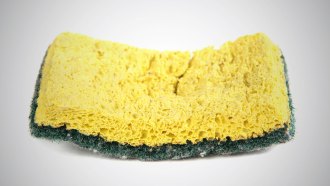
Kitchen sponges are bacteria’s dream home
Sponges are favorite spots for bacteria, partly because of the mixed-housing environment that the cleaner-uppers offer microbes.
- Chemistry
Scientists Say: Inorganic
Inorganic molecules include salts, minerals and other compounds that lack organics’ carbon-hydrogen bonds.
- Animals
Surprise! Sixteen tiny wasp species found masquerading as one
Scientists used new and old tools to overturn 160-year-old ideas about this wasp. They show you can’t tell a wasp by its looks.
- Animals
One of the earliest meat-eating mammals was saber-toothed
Millions of years before the evolution of saber-toothed cats, a newly discovered "hypercarnivore" prowled the forests of what is now San Diego.
- Chemistry
We all unknowingly eat plastic, which may host toxic pollutants
In the environment, plastics attract all types of toxic chemicals. If ingested, new data show, chemicals on those plastic bits may harm the gut.