All Stories
- Physics
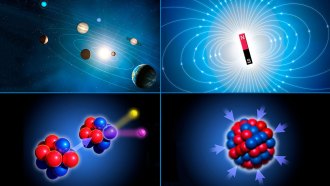
Explainer: The fundamental forces
Four fundamental forces control all interactions between matter, from the smallest subatomic particles to the largest structures in the universe.
- Materials Science
Engineers borrow a tree’s cellulose to toughen new materials
Cellulose gives plants their strength. Engineers are turning this renewable, environmentally friendly resource into brand new materials.
- Physics
Scientists Say: Doppler effect
The Doppler effect is a perceived change in the frequency of light or sound waves due to the wave source moving relative to an observer.
- Animals
Mosquitoes see red, which may be why they find us so appealing
Mosquitoes not only see colors, but also prefer certain ones, such as the hues of human skin.
- Life
Robots made of cells blur the line between creature and machine
Scientists are using living cells and tissue as building blocks to make robots. These new machines challenge ideas about robots and life itself.
- Tech
A new device uses atoms’ quantum weirdness to peer underground
Quantum sensors like this one could monitor magma beneath volcanoes or uncover archaeological artifacts.
- Science & Society
Let’s learn about citizen science
Volunteers across the globe are gathering and analyzing data for research on the environment, health, space and more.
- Math
Scientists Say: Equation
An equation states that two groups of numbers or variables are equal to each other.
- Climate
UN report calls for two-pronged approach to slow climate impacts
The latest IPCC climate change report underscores an urgent need for action to avoid the worst consequences of global warming.
- Chemistry
A disinfectant made from sawdust knocks out deadly microbes
It’s made by pressure-cooking sawdust and water, is cheap and easy to make — and could lead to greener cleaning products than chemicals used today.
- Health & Medicine
Sickle-cell gene therapies offer hope — and challenges
Doctor Erica Esrick discusses existing treatments and an ongoing clinical trial for a gene therapy to treat sickle cell disease.
- Genetics
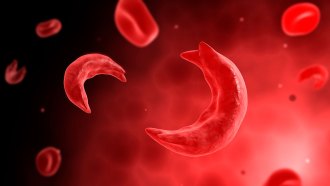
Explainer: What is sickle cell disease?
Gene mutations can alter an individual’s hemoglobin in ways that curl their blood cells. This can cause painful sickle cell disease.