All Stories
- Physics
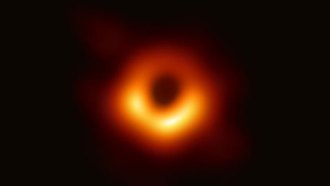
Here’s the first picture of a black hole
The Event Horizon Telescope imaged the supermassive beast lying some 55 million light-years away in a galaxy called M87.
- Physics
It took a ‘virtual’ telescope to actually picture a black hole
Here’s how scientists connected eight observatories across the world to create one Earth-sized telescope. This is what it took to create an image of a black hole.
- Physics
A short history of black holes
From dreaming up black holes to snapping the first picture of one, the history of black holes has had many twists and turns.
- Animals
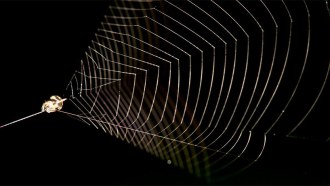
This spider slingshots itself at extreme speeds to catch prey
By winding up its web like a slingshot, this spider achieves an acceleration rate far faster than a cheetah’s.
- Health & Medicine
Why sleeping in on the weekend won’t work
A new study found that using weekends to catch up on missed sleep won’t erase health risks due to lost weekday sleep. It may even worsen things.
- Animals
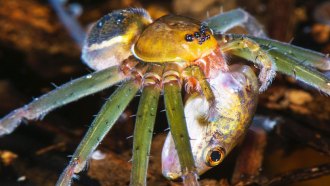
Spiders’ weird meals show how topsy-turvy Amazon food webs can be
Rare sightings of invertebrates eating small vertebrates upend some assumptions about who eats who in the Amazon rainforest’s complex ecosystem.
- Space
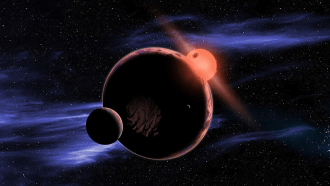
Scientists Say: Red Dwarf
Red dwarfs are the most common kind of star in the Milky Way. They are much smaller and cooler than our own sun.
- Climate
Using art to show the threat of climate change
Climate change can sometimes seem like a huge pile of hard-to-grasp numbers and graphs. These artists are finding new ways to help people understand big changes.
- Health & Medicine
Vaccines help everyone — even the unvaccinated
Vaccines are safe and save lives. But when people say no to them, there can be big — and even deadly — costs to their families and many others, too.
- Health & Medicine
Why some people think they know more than vaccine experts
New research sheds light on why some people choose myths over science when it comes to vaccines.
- Health & Medicine
Explainer: Vaccines are not linked to autism
Some parents say no to children’s vaccines because they worry immunizations could cause autism. But science has looked again and again and still finds no causal tie.
- Animals
The world’s largest bee was lost, but now it’s found
Wallace’s giant bee hadn’t been spotted in the wild in almost 40 years. Now, scientists have found it again.