All Stories
- Health & Medicine
Blame your ‘environment’ for your taste in music
Some scientists had thought we are born with our musical tastes. But a new study finds that what the ear prefers depends on what we listened to as we were growing up.
- Health & Medicine
Diabetes seems to be climbing quickly in U.S. teens
A serious disease is showing up more often in kids. Many are unaware they are sick. Many more show signs they are at risk of developing the disease, for which there is no cure.
- Health & Medicine
Even some Olympic athletes cheat with drugs
Some athletes have been using banned drugs or other methods to boost their performance. But scientists are working on new ways to catch them.
- Earth
Scientists Say: Hoodoo
When softer rocks are covered with a harder rock layer, weathering can wear away the softer stone. This will leave behind tall thin towers — hoodoos.
- Genetics
How fake sugar can lead to overeating
Scientists have found that fruit flies and mice eat more after consuming food laced with a popular fake sugar.
- Earth
Something in plastics may be weakening kids’ teeth
The body can confuse some pollutants for a natural hormone. Researchers in France now find such pollutant exposures in childhood may lead cells to make defective tooth enamel.
- Earth
Non-scents: Pollution can confuse pollinators’ sniffers
New research uses computers to predict how much longer it takes bees and other pollinating insects to sniff out lunch in a polluted environment.
-
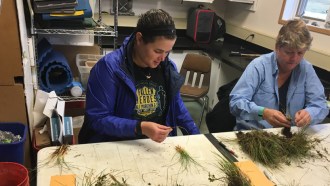
Teachers get to do cool science in the Arctic
The Toolik Field Station offers a hands-on research experience for science teachers, so they can take the latest techniques back to their classrooms.
- Animals
Plants, animals adapt to city living
Cities have turned into experiments in evolution for both plants and animals, from the taste of clover to the stickiness of lizards’ toes.
- Space
A new, nonexplosive source of black holes?
At least one black hole may have formed from the collapse of a cloud of gas, which is not the usual birthing scheme. This might even be how some of the earliest gargantuan black holes developed.
- Genetics
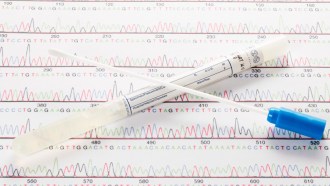
Scientists Say: DNA sequencing
All of us have our own individual DNA. Now, scientists can determine what each individual strand is made of — a process called DNA sequencing.
- Animals
End of Latin America’s Zika epidemic is in sight
A computer simulation suggests the Zika epidemic in Latin America is peaking and may not strike hard again for up to three decades.