All Stories
- Agriculture
A shock to the food system
Droughts and other weather extremes caused by climate change are dramatically increasing the risk of short-term interruptions in the supplies of food.
- Physics
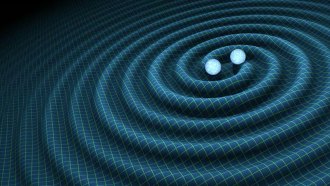
Say hello to gravity waves
Einstein predicted these waves 100 years ago. Scientists have finally proven him right.
- Health & Medicine
Flexible electronics track sweat
A flexible, wireless health monitor that can wrap around the wrist tracks temperature and analyzes sweat to detect signs of too much water loss.
- Physics
Gravity waves detected at last!
Albert Einstein predicted gravitational waves 100 years ago. Now scientists have detected them coming from the collision of two black holes.
- Physics
Explainer: What are gravitational waves?
Albert Einstein had predicted that large catastrophes, like colliding black holes, should produce tiny ripples in the fabric of space. In 2016, scientists reported finally detecting them
- Physics
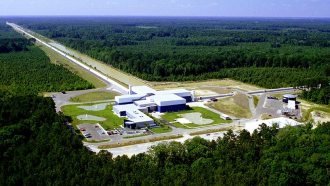
How to catch a gravity wave
Physicists have just announced finding gravity waves. The phenomenon was predicted a century ago by Einstein’s theory of general relativity. Here’s what it took to detect the waves.
- Health & Medicine
Teen data find vapers often become smokers
Many view vaping as less harmful than cigarettes. But an increasing number of studies suggest that using e-cigarettes increases the risk a teenager will start to smoke.
- Plants
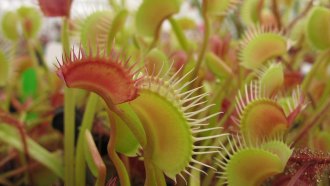
Before eating, Venus flytraps must ‘count’
Researchers find that Venus flytraps respond to the number of times insects touch their sensory hairs. This tells them when it’s time to turn on digestion.
- Health & Medicine
To control overeating: Slow down!
Encouraging young people to eat more slowly — and to stop when they’re full — may help prevent obesity, a new study finds.
- Chemistry
Scientists Say: Precipitation
Chemicals can dissolve into a solution, but when they come out, they precipitate.
- Animals
Picture This: Plesiosaurs swam like penguins
A computer model suggests plesiosaurs — ancient marine reptiles — swam like penguins, using front flippers for power and back flippers for steering.
- Tech
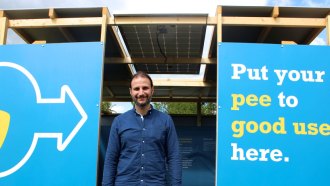
Powered by poop and pee?
Scientists are developing methods to not only remove human waste from wastewater, but also to harness the energy hidden within it.