All Stories
- Agriculture
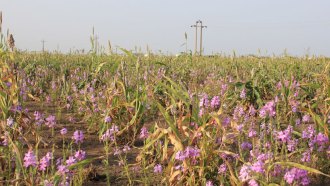
Plant ‘vampires’ lay in wait
A new study shows how some parasitic plants evolved the ability to sense a potential host — and then send out root-like structures to feed on them.
- Health & Medicine
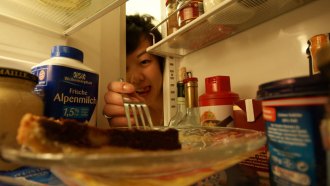
News Brief: Stress may break diet willpower
A new study suggests stress can affect our behavior — and willpower — by making tasty foods look more irresistible.
- Physics
Scientists Say: Torque
Some forces pull and some push. This force produces turning or twisting.
- Chemistry
Nanosilver: Naughty or nice?
Nanosilver is in many products, from socks to toothbrushes. The tiny particles kill microbes. But it’s still unclear whether they can harm us or the environment.
- Climate
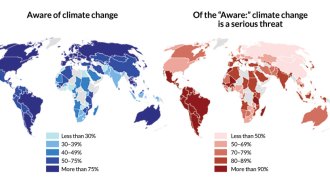
Beliefs about global warming vary by country
Opinions about climate change — whether it exists, what’s causing it and how dangerous it is — vary greatly around the world.
- Genetics
DNA: Our ancient ancestors had lots more
Ancestral humans and their extinct relatives had much more DNA than do people today, a new study finds. It mapped genetic differences over time among 125 different human groups.
-
Oops. Correcting scientific errors
Scientific research is performed by people, and those people sometimes make mistakes they need to correct. Here’s a new example: Think of it as the “Case of the "Plagued Subway."
- Earth
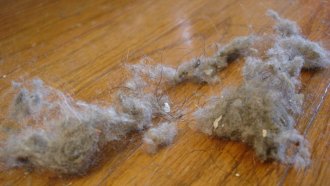
Can house dust make us fat?
Materials found in dust, including common fats, may trigger human fat cells to grow. This might promote weight gain, some scientists worry.
- Animals
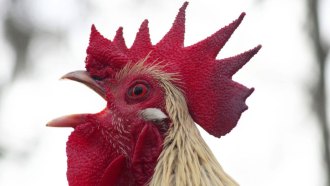
Top rooster announces the dawn
Roosters know their places in the chicken world. Lower-ranking birds defer to the guy at the top of the pecking order. And they show it by holding their crows until after he greets the new day.
- Science & Society
Scientists Say: Social
Social is a single word used in many ways. But whether it’s social media or social order, social describes how we interact.
-
Scientists Say: Your weekly word
This glossary provides definitions and audio clips to help you learn and pronounce even the toughest science terms.
- Agriculture
Organic food starts to prove its worth
Organic food often comes with a higher price. But research is showing that food grown this way can be better for the environment — and possibly for us.