All Stories
- Chemistry
Air pollution can make it harder for pollinators to find flowers
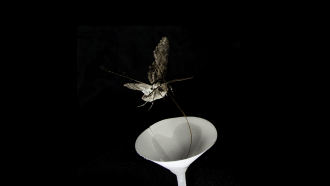
Pollutants that build up in night air can break down the scents that attract pollinating hawkmoths to primrose blooms, disrupting their pollination.
- Humans
Let’s learn about fingerprints
Researchers are still making new discoveries about how our fingerprints form — and how to use them to solve crimes.
- Space
Did James Webb telescope images ‘break’ the universe?
James Webb data show bright, massive galaxies that would appear to require new physics to explain. But maybe not, Hubble data suggest.
- Tech
Scientists Say: Digital Footprint
Your digital footprint contains both what you post online — and information about your online activity collected by others.
- Animals
This egg-laying amphibian feeds its babies ‘milk’
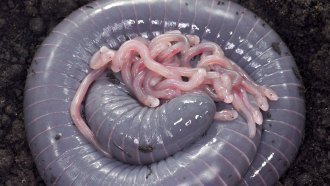
Similar to mammals, this caecilian — an egg-laying amphibian — makes a nutrient-rich, milk-like fluid to feed its babies up to six times a day.
- Artificial Intelligence
How to design artificial intelligence that acts nice — and only nice
Today’s bots can’t turn against us, but they can cause harm. “AI safety” aims to train this tech so it will always be honest, harmless and helpful.
- Artificial Intelligence
‘Jailbreaks’ bring out the evil side of chatbots
Researchers break chatbots in order to fix them. This so-called red-teaming is an important way to improve AI’s behavior.
- Chemistry
Turning jeans blue with sunlight might help the environment
When dipped in indican and exposed to sunlight, yarn turns a deep blue. This process is more eco-friendly than the current denim dyeing method.
- Animals
Among mammals, males aren’t usually bigger than females
In a study of more than 400 mammal species, less than half have males that are heavier than females.
- Earth
Scientists Say: Supercontinent
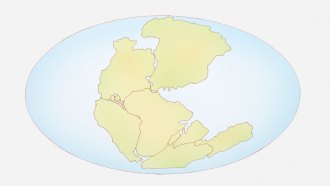
These gigantic landmasses form when much of Earth’s landmass smashes together.
- Artificial Intelligence
A new tool could guard against deepfake voice scams
Scammers can use AI to create deepfake mimics of people’s voices. AntiFake could make that type of trick much harder to pull off.
- Health & Medicine
A new type of immune cell may cause lifelong allergies
These special memory cells were present in people with allergies and absent in those without.